

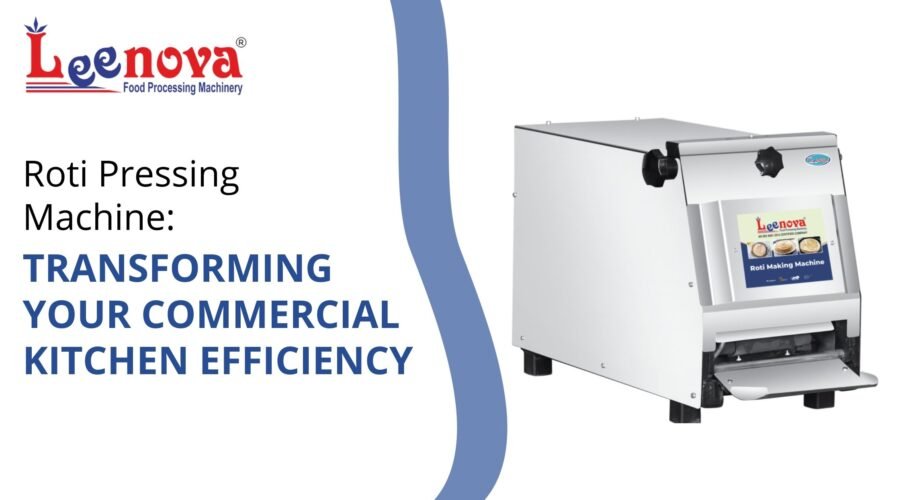
Roti rolling is one of the biggest hidden bottlenecks in commercial kitchens. Two or three staff spend hours at the counter, rolling uneven rotis that slow service and strain labor budgets. When volume spikes, quality drops first: thickness varies, diameters wobble, and puffing becomes unpredictable. A roti pressing machine changes that equation by separating skill from output and making each roti a repeatable process instead of an art form.
A well-specified pressing machine can handle 500–2,000+ rotis per hour with one operator, while keeping diameter and thickness within tight tolerances. That jump in consistency has side effects managers often miss: fewer complaints, faster cooking cycles, and easier portion control on flour and gas. This guide walks through what a roti pressing machine does, key technical features, how it changes workflow, what it really costs, and how to choose the right capacity for your kitchen.
What is a roti pressing machine?
A roti pressing machine flattens dough balls into uniform discs using heated or unheated plates under controlled pressure and time. It replaces manual rolling with a repeatable pressing action that delivers consistent diameter and thickness from one roti to the next.
In most commercial setups it sits between dough balling and baking. Staff feed pre-portioned dough into the press, collect flat rotis on trays or conveyors, and move them to tawas, belt ovens, or full roti lines for baking.
Types of roti pressing solutions
Manual and semi-automatic pressing
Regular “press-only” machines use a lever or push-button to close heated plates on each dough ball. One operator handles:
- Placing dough balls on the plate
- Activating the press
- Removing the flattened roti
These are ideal when you already have a strong tawa team and want to remove just the rolling bottleneck.
Pressing in full automatic lines
In fully automatic roti lines, the pressing unit is integrated with:
- Dough sheeters or balling systems
- Transfer conveyors
- Baking zone (tawa or tunnel oven)
Here, pressing is one stage in a continuous flow from dough to ready roti, suited for hostels, canteens, and central kitchens.
Key technical features to evaluate
Capacity and throughput
Ignore only “max capacity” claims and check realistic hourly numbers. A typical commercial press handles:
- 500–800 rotis/hour for small canteens
- 1,000–1,500 rotis/hour for mid-size restaurants and hostels
- 2,000+ rotis/hour for high-volume food lines
Also ask whether the stated capacity assumes a single operator or a helper for loading/unloading.
Size, thickness, and shape control
Look for clear specs on:
- Diameter range (for example, 4–9 inches)
- Thickness adjustment (mm range and setting method)
- Plate alignment and pressure control for round, centered rotis
Many kitchens discover that consistent diameter saves more gas than expected because rotis cook evenly and need fewer “rescues” on the tawa.
Build quality and hygiene
Materials and surface finish
For long-term food safety and cleaning ease, focus on:
- Stainless steel body and food-contact parts
- Smooth welds and rounded corners (no food traps)
- Polished or non-stick plates that reduce sticking
Machines with poor surface finish often cost more in cleaning time and rejected rotis than they save at purchase.
Cleaning access and design
Check how quickly staff can:
- Open or tilt plates for wiping
- Remove scrap dough from edges
- Clean flour-dust zones around the press
If daily cleaning takes more than 10–15 minutes, the machine will be neglected on busy days and hygiene will slip.
Performance and workflow impact
Removing the rolling bottleneck
In many kitchens, 40–60% of roti prep time is spent on rolling, not baking. Once pressing becomes a 1–2 person job at predictable speed:
- Tawa staff can focus on puffing and finishing
- Prep managers can plan roti batches more accurately
- Roti service becomes less dependent on one “expert roller”
Kitchens that track it often see 20–30% more rotis produced per hour with the same staff count once the press is integrated properly.
Consistency and cooking behavior
Uniform thickness means:
- Faster, more even cooking
- Less undercooked center / overdone edge complaints
- Easier training for new tawa operators
Standardized rotis also simplify portion control on flour: once the dough ball size and pressing settings are fixed, each roti uses roughly the same grams of dough.
Ease of use, safety, and maintenance
Operator interface and safety
Frontline staff should be able to learn the machine in under an hour. Look for:
- Simple, labeled controls (temperature, timer, start/stop)
- Safe hand positions away from hot plates
- Emergency stop and basic interlocks on covers
Machines that feel “intimidating” or complex on day one usually end up underused or misused.
Daily care and basic service
Before buying, map out the routine:
- How long daily cleaning and wipe-down takes
- What weekly checks are needed (bolts, plate alignment, wiring)
- Expected life of plates, heaters, and any non-stick surface
A common pattern: kitchens treat presses like “fit and forget” equipment, then face downtime because nobody was assigned basic checks.
Cost and ROI in real kitchens
Labor and capacity trade-offs
Switching from manual rolling to pressing usually:
- Cuts rolling labor by 50–70% for the same volume
- Or doubles roti volume with the same number of people
The uncomfortable part many owners notice later: overtime bills and peak-hour staffing often drop before ingredient costs do.
Hidden and ongoing costs
Beyond the sticker price, budget for:
- Power consumption (heaters and control system)
- Occasional plate resurfacing or non-stick renewal
- Periodic thermostat, sensor, or wiring replacement
Choosing a slightly oversized, well-built press is often cheaper over five years than running a smaller unit at its absolute limit every day.
Choosing the right roti pressing machine
Matching machine to your operation
Start with four numbers:
- Rotis per day
- Peak rotis needed in one hour
- Available counter or floor space
- Number of people you can assign to roti at peak
Then shortlist machines that:
- Cover your peak with 20–30% spare capacity
- Physically fit near your dough and tawa stations
- Can be run reliably by your current staff skill level
Planning for future growth
If you expect volume to grow, it can be smarter to:
- Start with a pressing machine sized for the next 2–3 years
- Choose a model that can later integrate with conveyors or semi-automatic lines
- Standardize dough ball size and recipes now, so scaling later is easier
Treat the press as a building block in a future roti line, not just a standalone gadget.
FAQs
Q: Can a roti pressing machine handle different breads like puri or paratha?
A: Many presses can handle puris and some parathas if diameter and thickness settings match your recipe. However, layered or stuffed items may need different handling or separate equipment, so always test with your specific dough.
Q: Do I still need skilled staff after installing a press?
A: You need reliable operators, but not expert rollers. Skill shifts from hand-rolling technique to managing dough consistency, timing, and baking. This makes staffing more flexible and reduces dependence on one or two key people.
Q: How important is dough quality once pressing is automated?
A: More important than before. Pressing exposes issues like poor gluten development or inconsistent hydration very quickly. Many kitchens find they must tighten their dough process the moment they automate pressing.
Q: What if my roti volume is low—does a pressing machine still make sense?
A: For very low volumes, manual rolling may still be viable. The moment you cross a few hundred rotis per service or run multiple services a day, a press starts paying for itself in labor hours and reduced stress on peak shifts.
Conclusion
A roti pressing machine turns roti preparation from a manual bottleneck into a controlled, repeatable process. When you size it correctly and integrate it into your line, you gain speed, consistency, and far more predictable labor use.
If you are tracking complaints, overtime, or missed orders around roti service, it is time to quantify your roti workload and evaluate a pressing machine against those real numbers.
At Leenova Kitchen Equipments, the focus is simple: build roti pressing machines that match real kitchen volumes, hold consistent quality, and stay serviceable for years. Each model is specified around actual roti counts, available space, and staff capacity—not just catalogue claims. Visit leenovakitchenequipments.com to discuss your current roti line, get capacity-based recommendations, and shortlist a pressing machine that fits your kitchen today and scales with you tomorrow.