

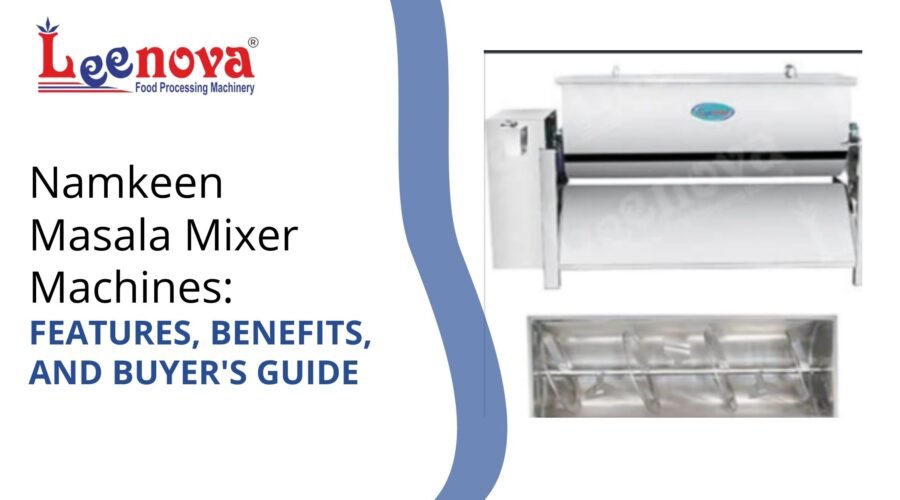
Manual masala mixing in namkeen production creates uneven coating, product breakage, and wasted spices. Workers mixing 40-50 kg batches by hand in large tubs spend 15-20 minutes per batch achieving inconsistent results that customers notice in every bite. Some pieces get over-coated while others stay bland, creating taste variation that hurts brand reputation. A dedicated namkeen masala mixer machine eliminates these problems completely. These machines tumble namkeen gently while coating evenly with oil and spices, delivering uniform flavor in 3-5 minutes per batch. As commercial food equipment manufacturers, we’ve supplied mixing machines to namkeen units across capacities from 10 kg startup batches to 100 kg production runs. This guide explains how namkeen masala mixers work, essential features that affect coating quality, capacity matching, operational benefits, and what justifies the investment for snack producers.
Understanding Namkeen Masala Mixer Machines
Working Mechanism
Namkeen masala mixers use rotating drums or paddles to tumble snack products while oil and spices distribute evenly across surfaces. The drum rotates at controlled speeds—typically 24-36 RPM—creating gentle tumbling action that coats without breaking delicate namkeen pieces.
The mixing sequence matters. Operators load fried namkeen first, add edible oil or ghee as a binding agent, then introduce dry masala powder. The oil helps spices adhere uniformly while the tumbling action ensures every piece gets coated.
Most commercial models feature tilting discharge systems that empty the drum without manual scooping. This preserves product integrity and speeds up batch changeovers during production runs.
Common Capacity Ranges
Small mixers handle 10-20 kg per batch, suitable for startup namkeen businesses and shops producing limited daily volumes. Mid-range units process 40-50 kg batches for established brands with growing distribution. Industrial models mixing 80-100 kg serve large-scale manufacturers supplying retail chains.
Key Features and Specifications
Construction Material
Food-grade stainless steel construction (SS 202 or SS 304) provides corrosion resistance and meets FSSAI hygiene standards. The drum, paddles, and discharge chute require stainless steel for direct food contact. Support frames may use mild steel with protective coating to reduce costs.
SS 304 grade offers superior durability for continuous production environments processing multiple batches daily. SS 202 grade balances cost and performance for moderate-volume operations.
Motor Power and Drive System
Motor specifications range from 0.5 HP for 10-20 kg mixers to 1.5 HP for 80-100 kg capacity units. Single-phase 220V motors fit standard electrical systems without requiring three-phase installation.
Gearbox or worm-drive systems reduce motor speed to optimal drum rotation rates while increasing torque. This prevents product damage from excessive tumbling speed and ensures even mixing throughout the batch.
Drum Design and Discharge
Drum size directly affects mixing efficiency and batch capacity. Larger diameters create better tumbling action and reduce mixing time. Some designs incorporate baffles or internal fins that lift and cascade product for enhanced coating.
Manual tilting mechanisms use a lever to tip the drum for discharge. Semi-automatic systems include gear-assisted tilting that reduces operator effort. Fully automatic models integrate pneumatic or hydraulic tilting with programmable timers.
Benefits for Namkeen Production
Uniform Coating and Taste Consistency
Machine mixing achieves 95-98% coating uniformity compared to 70-75% for manual tub mixing. Every namkeen piece receives proportional masala coating, creating consistent taste that builds customer loyalty and repeat purchases.youtube
Uniform coating also improves shelf appeal. Products look professional with even spice distribution rather than the clumped, uneven appearance of hand-mixed batches.
Time and Labor Savings
A 40 kg batch mixed manually takes 15-20 minutes. A masala mixer completes the same batch in 3-5 minutes. That’s 70-75% time reduction, freeing labor for packing, quality control, and other value-adding tasks.
Batch changeover accelerates with tilting discharge. Manual scooping from tubs takes 8-10 minutes; tilting discharge empties in 60-90 seconds.
Reduced Product Breakage
Manual mixing breaks 8-12% of delicate namkeen pieces like sev, gathiya, and thin chakli through rough handling. Gentle drum rotation reduces breakage to 2-4%, preserving product value and reducing waste.
Lower breakage directly improves profit margins. Every kilogram of broken pieces becomes waste or gets sold at discount, cutting into revenue.
Lower Masala Wastage
Manual mixing leaves 15-20% of masala stuck to tub walls and mixing tools. Machine mixing with proper drum design and discharge systems retains 95%+ of added masala on the product.
At masala costs of ₹300-400 per kg, saving 15% on a 50 kg daily production (using 2-3 kg masala) recovers ₹90-120 daily or ₹2,700-3,600 monthly.
Applications Across Snack Categories
Namkeen and Farsan Varieties
Masala mixers handle the full range of Indian savory snacks:
- Sev, bhujia, gathiya, and extruded products
- Fried farsan like chakli, chivda, and fryums
- Mixture products combining multiple components
- Roasted and coated nuts, peanuts, and pulses
Spice and Powder Blending
Beyond namkeen coating, these mixers blend dry spice powders, flour mixes, and seasoning blends. The gentle tumbling action prevents dust generation while achieving thorough mixing.
Capacity Matching and Selection
Small Operations (10-30 kg daily)
Startup namkeen shops and home-based businesses processing 10-30 kg daily need 10-20 kg batch capacity. Two to three batches complete daily production in 10-15 minutes total mixing time.
These compact units measure 1.5-2 feet drum diameter, fit in small production areas, and typically cost ₹12,000-18,000.
Medium Production (50-150 kg daily)
Established brands producing 50-150 kg daily require 40-50 kg batch mixers. Three to four batches handle daily volume in 12-20 minutes of mixing time, maintaining production flow during peak seasons.
Large Manufacturing (200+ kg daily)
Industrial namkeen plants processing 200+ kg daily need 80-100 kg capacity or multiple mid-sized units running parallel. The higher throughput justifies investment in automated discharge and integrated masala dosing systems.
Operating Best Practices
Loading Sequence
- Load fried and cooled namkeen into the drum (never load hot product—residual heat creates moisture condensation)
- Add measured edible oil or ghee (typically 1-2% of namkeen weight)
- Run drum for 30-45 seconds to distribute oil evenly
- Add masala powder in measured quantity (2-4% of namkeen weight)
- Mix for 2-3 minutes until coating appears uniform
- Tilt and discharge into packing containers
Batch Size Optimization
Running the mixer at 70-80% capacity produces best results. Overfilling reduces tumbling space and creates uneven coating. Underfilling wastes mixing time and energy.
For a 50 kg rated mixer, optimal batch size runs 35-40 kg. This provides adequate tumbling volume for proper mixing action.
Maintenance Requirements
Clean the drum and discharge chute after every 3-4 batches to prevent residue buildup. Dried oil and masala create sticky layers that affect subsequent batch quality.
Inspect gearbox oil levels monthly and top up as needed. Proper lubrication extends gearbox life from 3-5 years to 8-10 years, avoiding costly repairs.
Check drum rotation balance and bearing noise weekly. Unusual vibration or grinding sounds indicate bearing wear that requires immediate attention.
Price Range and Investment Return
Commercial namkeen masala mixers range from ₹12,000 for basic 10-20 kg manual models to ₹45,000-60,000 for 80-100 kg automated units. Stainless steel construction, motor quality, and tilting mechanism drive price differences.
A ₹25,000 mixer (40-50 kg capacity) processing 60 kg daily saves approximately ₹180 daily in labor costs (15 minutes × ₹720/hour skilled labor rate). Add ₹100 daily masala savings from reduced wastage. Combined savings of ₹280 daily recover the investment in 90 working days—roughly three months.
FAQs
Q: What is the ideal drum rotation speed for namkeen mixing?
A: Most commercial namkeen mixers operate at 24-36 RPM. This speed creates gentle tumbling without excessive agitation that breaks delicate products. Higher speeds generate centrifugal force that pins product to drum walls instead of tumbling, reducing coating effectiveness.
Q: Can the same mixer handle both wet and dry masala coating?
A: Yes, namkeen masala mixers handle both applications effectively. Wet coating uses oil, ghee, or liquid seasonings; dry coating applies powdered masala. The oil-then-powder sequence works best for maximum adherence and uniform distribution.
Q: How much electricity does a namkeen mixer consume?
A: A 1 HP mixer consumes approximately 0.75 kWh per hour of operation. Processing 50 kg in three batches (15 minutes total) uses about 0.19 kWh, costing ₹1.50-2 at commercial electricity rates. Energy cost is negligible compared to labor and masala savings.
Q: What is the difference between paddle mixers and drum mixers?
A: Drum mixers tumble the entire batch using rotating cylinder action, ideal for delicate namkeen that breaks easily. Paddle mixers use internal blades to stir product and work better for heavier, sturdier items like roasted nuts. Drum design suits most namkeen applications.
Q: How long do namkeen masala mixers typically last?
A: With proper maintenance, commercial namkeen mixers last 8-12 years in daily production use. Stainless steel models outlast mild steel versions by 40-50%. Regular cleaning, gearbox lubrication, and bearing inspection determine actual lifespan.
Q: Do I need three-phase power for a commercial namkeen mixer?
A: No, most commercial namkeen mixers up to 80-100 kg capacity operate on single-phase 220V power. Only very large industrial models above 150 kg require three-phase 440V supply. Single-phase compatibility makes installation straightforward in existing production areas.
Conclusion
Namkeen masala mixer machines cut mixing time by 70-75%, reduce product breakage by 60-70%, lower masala waste by 15%, and deliver uniform coating that manual methods cannot match. The right capacity and construction quality pay back within 3-4 months for most commercial operations.
Leenova Kitchen Equipments manufactures namkeen masala mixer machines in capacities from 10 kg to 100 kg per batch, built with food-grade stainless steel drums, single-phase motors, and tilting discharge systems. Our designs balance gentle mixing action that preserves product integrity with efficient coating that reduces waste and speeds up production.
Since 2006, we’ve supplied commercial food processing equipment to namkeen manufacturers, farsan producers, and snack businesses across India. Our mixer machines feature practical engineering: easy cleaning between batches, robust gearboxes for continuous operation, and drum designs optimized for Indian namkeen varieties.
Whether starting a new namkeen line or upgrading from manual tub mixing, our range includes compact 1.5-foot models for small shops and larger 3-foot units for established production facilities—all priced competitively with transparent warranty coverage.
Ready to upgrade your namkeen production with consistent masala coating and faster batch turnaround? Contact Leenova Kitchen Equipments today for specifications, capacity recommendations, and pricing on masala mixer machines designed for commercial reliability and daily production demands.