

Manual halwa production locks sweet shops into 8–12 kg batches, burns 90–120 minutes per batch, and demands constant stirring that costs ₹40–50 per hour in skilled labor. Taste varies batch to batch because flame control, scraping pressure, and timing depend on whoever holds the ladle that shifts. Scale beyond 30–40 kg daily output, and you hit a labor wall—staff fatigue ruins consistency, margins shrink, and festival-season demand becomes a bottleneck you can’t fix by hiring more hands.
A commercial halwa machine changes batch size, consistency, and throughput. Jacketed kettles with auto-scrapers cook 25–100 kg per batch with even heating, eliminate manual stirring, and tilt for safe discharge in under 5 minutes. The right capacity, heating source, and mixing system match your recipe, daily volume, and fuel costs—turning a labor-heavy process into a repeatable, scalable operation.
This guide covers machine types, capacity selection, heating options, automation levels, hygiene standards, and the mistakes that waste money on undersized or incompatible equipment. You’ll learn how to size a halwa machine for current and peak demand, choose gas vs electric vs steam heating based on real running costs, and evaluate tilting, scraping, and cleaning design for daily reliability.
Types of Halwa and Sweet-Making Machines
Dedicated Halwa Machines
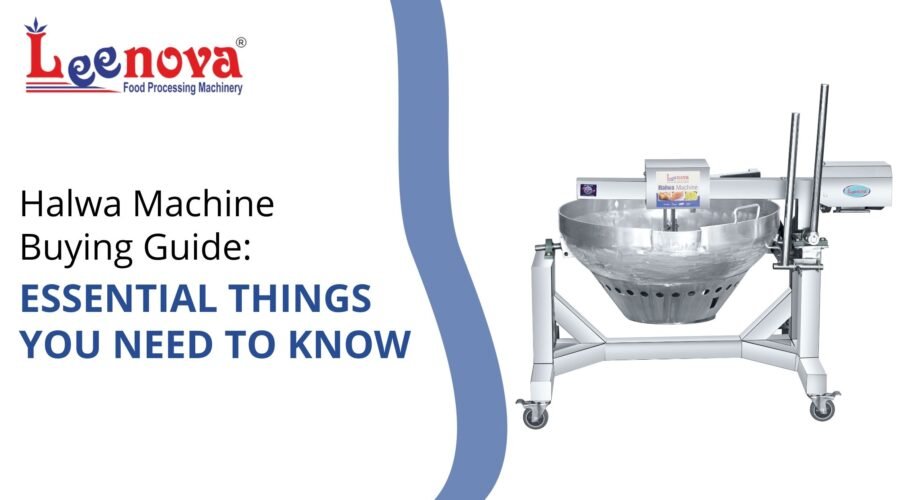
Kadai-style machines with jacketed bowls, motorized scrapers, and tilting arrangements handle gajar, moong dal, sooji, and wheat halwa. Capacities range from 10 kg to 100 kg per batch. These units focus on controlled heating and continuous scraping to prevent sticking and achieve the right texture for traditional recipes.
Multi-Sweet Machines
Combined halwa and khoya / mawa machines run multiple products on the same line. You cook halwa in one shift, switch to milk reduction for khoya in the next. Versatility suits sweet shops producing 4–6 product types daily, but cleaning between batches adds 15–20 minutes per changeover.
Steam Jacketed Kettles
Industrial kettles rated at 90–400 liters handle halwa, basundi, rabri, and bulk cooking tasks. Steam or electric heating delivers precise temperature control. These machines fit large-scale production plants where halwa is one item on a wider sweet and dairy menu.
Capacity and Batch Size Selection
Halwa machines list capacity in kg per batch or liters. A 50 kg batch machine processes enough halwa for 300–400 retail packs (125–150 grams each) in one cooking cycle. Running two batches per day delivers 600–800 packs—enough throughput for a mid-size sweet outlet or catering kitchen.
Underestimate capacity and you run 4–5 batches daily, overworking the motor, scraper, and heating elements. Festival-season demand spikes 2–3x normal volume; if your machine runs at 90% capacity year-round, you have no headroom for Diwali, Eid, or wedding orders. Size for 120–150% of average daily demand to handle peaks without breakdowns.
Heating Options and Energy Source
Gas-Fired Halwa Machines
Inbuilt LPG or PNG burners sit beneath the jacketed bowl. Flame control valves adjust heat intensity for different halwa stages—high flame for initial cooking, low flame for final roasting. Gas heating costs ₹3–5 per kg of halwa in fuel, delivers fast temperature rise, and works in locations without stable three-phase power. Ventilation and exhaust requirements add to installation cost.
Electric and Steam Heating
Electric jacketed kettles use heating elements in the jacket; steam systems connect to boilers and circulate steam through the jacket space. Both deliver even heat with zero flame risk. Electric units need three-phase supply (5–15 kW load); steam systems require boiler capacity and piping. Running cost sits at ₹4–7 per kg of halwa depending on electricity tariffs or boiler efficiency, but temperature control is tighter and cleaning is simpler without soot or flame residue.
Material of Construction and Hygiene
Full SS304 stainless steel construction—bowl, jacket, scraper arms, frame, and discharge chute—resists acidic ingredients, survives daily washing, and meets food safety norms. Wall thickness of 3–5 mm in the cooking bowl prevents warping under thermal stress. Machines with mild steel frames or aluminium bowls corrode within 18–24 months of continuous use and contaminate the product with discoloration.
Wheel-mounted designs let you move the machine for floor cleaning; fixed installations need drain channels and hose access around the base. Tilting mechanisms must lock securely in the upright position during cooking and release smoothly for discharge—poorly designed pivots jam or require two operators to tilt, wasting time and creating safety risks.
Automation Level and Mixing Control
Semi-automatic halwa machines run motorized scrapers at fixed or variable speed, but the operator controls burner intensity, tilting, and batch timing manually. Fully automatic units integrate temperature sensors, timers, and programmable controls that adjust heating and scraping based on preset recipes. Automation cuts labor from 1.5–2 hours of constant attention per batch to 15–20 minutes of loading, monitoring, and discharge.
Motor power for scrapers ranges from 0.5 HP to 3 HP depending on batch size and halwa density. Underpowered motors stall in thick batches; oversized motors consume unnecessary energy and generate excessive noise.
Cleaning, Maintenance, and Safety
Daily cleaning involves scraping residue from bowl walls, flushing the jacket (if steam-heated), and washing contact surfaces with detergent and hot water. Machines with tool-free scraper removal cut cleaning time to 10–15 minutes; units requiring wrench disassembly waste 30+ minutes per shift. Scraper blades wear every 6–12 months depending on batch frequency and ingredient abrasiveness—replacements cost ₹500–2,000 per set.
Thermal insulation on the outer jacket prevents burns during operation. Safety interlocks should disable the heating element or burner when the tilting mechanism unlocks, preventing spills of hot product during discharge.
Common Mistakes When Buying a Halwa Machine
Buyers choose capacity based only on current daily volume, ignoring growth and seasonal peaks. A shop producing 20 kg daily buys a 25 kg machine, then struggles during festival months when demand hits 50–60 kg. Fuel source mismatches occur when buyers pick gas models without confirming LPG availability or three-phase power for electric units, leading to installation delays and retrofit costs.
Ignoring tilting and discharge design creates operational pain—machines that tilt less than 90 degrees leave 2–3 kg of product stuck in the bowl, wasting yield and forcing manual scraping after every batch.
Frequently Asked Questions
Q: What capacity halwa machine is suitable for a sweet shop producing 200–300 kg per week?
A: A 40–50 kg per batch machine running 1–2 batches daily handles 280–700 kg weekly output. This leaves headroom for festival spikes and minimizes motor wear from continuous operation at maximum load.
Q: Is gas heating cheaper than electric for halwa machines?
A: Gas costs ₹3–5 per kg of halwa; electric costs ₹4–7 per kg depending on tariff. Gas delivers faster heating but requires ventilation and regular burner maintenance. Electric heating offers tighter temperature control and cleaner operation, offsetting the marginal fuel cost difference in large-volume production.
Q: Can the same machine cook different types of halwa and other milk-based sweets?
A: Yes. Jacketed kettles handle gajar, moong dal, sooji halwa, khoya, basundi, and rabri with recipe adjustments. Cleaning between product changes takes 15–20 minutes. Dedicated halwa machines optimized for scraping and texture may underperform on liquid-heavy recipes like basundi.
Q: How often do scraper blades need replacement?
A: Scraper blades last 6–12 months with daily use. Halwa with high sugar content or abrasive ingredients like semolina wears blades faster. Inspect monthly; replace when scraping efficiency drops and sticking increases.
Q: What are the space and utility requirements for a 50 kg halwa machine?
A: Expect 1.2–1.5 meters width, 1–1.2 meters depth, and 1.2–1.5 meters height. Gas models need LPG line and exhaust; electric units require 10–15 kW three-phase power. Leave 1 meter clearance around the machine for loading, tilting, and cleaning access.
Leenova Kitchen Equipments supplies halwa and multi-sweet machines built for Indian commercial kitchens—stainless steel construction, capacities from 10 kg to 100 kg per batch, gas and electric heating options, and robust tilting systems that handle daily production without downtime. Visit leenovakitchenequipments.com or contact us for capacity planning, utility setup guidance, and pricing tailored to your sweet shop or catering operation.