

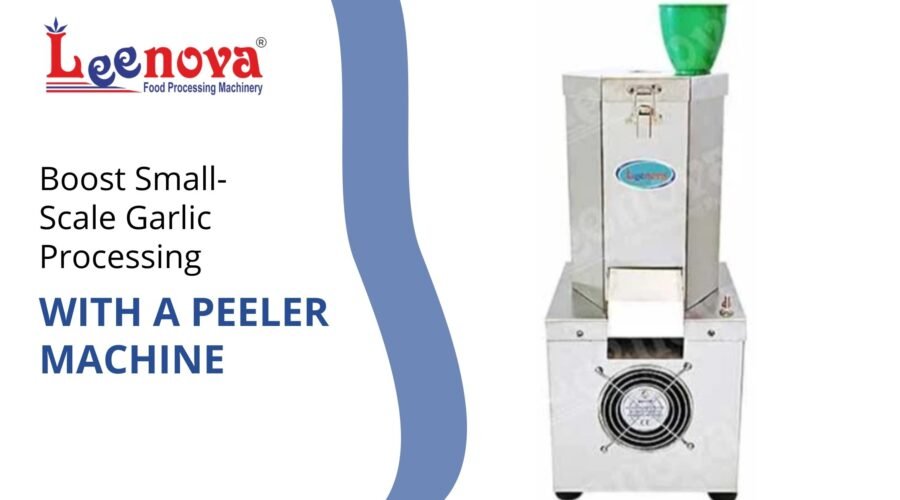
Small-scale garlic processors face a labor trap. Manual peeling costs ₹16-18 per kilogram when factoring in the time required, and workers spend hours daily on this repetitive task that causes hand strain and eye irritation. A restaurant peeling 15-20 kg daily loses 2-3 hours of prep time that could go toward actual cooking and service. Home-based food businesses and small catering units struggle even more—the labor cost makes garlic-heavy recipes less profitable. An automatic garlic peeler machine changes this completely. These compact machines process 10-12 kg per hour with 86-95% peeling efficiency while reducing hand contact by 90%. As kitchen equipment manufacturers since 2006, we’ve supplied garlic peelers to small restaurants, cloud kitchens, and home-based processors who need commercial efficiency without industrial-scale investment. This guide explains how garlic peeler machines work, essential features for small operations, the real cost savings, capacity matching, and what makes one machine better than another for your specific setup.
How Garlic Peeler Machines Work
Pneumatic Peeling Process
Dry type garlic peelers use compressed air to separate skin from cloves without water or chemicals. Garlic cloves enter through a hopper into a cylindrical peeling chamber where high-pressure air at 6-8 bar creates a cyclone vortex effect.
The rotating air pressure and turbulent flow rub cloves against each other and the chamber walls. This friction removes the papery skin in 10-20 seconds per batch. The dry process keeps cloves ready for immediate use or storage without moisture-related spoilage.
A separation system sorts peeled garlic from skin debris automatically. Peeled cloves exit through one outlet while lightweight skin gets expelled through another, minimizing sorting time.
Key Components
The 0.25-0.5 HP motor powers the air compression and chamber rotation at optimal speeds. Single-phase 220V operation makes these machines compatible with standard household and small kitchen electrical systems.
Food-grade stainless steel or approved plastic materials in the peeling chamber meet hygiene standards and resist garlic acid corrosion. Removable parts simplify cleaning between batches and at day’s end.
Essential Features for Small-Scale Operations
Compact Footprint
Small-capacity garlic peelers measure 200-300 mm in length and width, fitting on kitchen countertops alongside other prep equipment. The 10-15 kg weight allows easy repositioning without permanent installation or foundation work.
This portability matters for home-based businesses operating in limited spaces or multi-purpose kitchens. The machine stores easily when not in use, unlike larger industrial models requiring dedicated floor space.
Right-Sized Capacity
The 10-12 kg/hour capacity matches small restaurant and catering volumes perfectly. Processing 20 kg of garlic takes 1.5-2 hours of machine time versus 6-8 hours manually—a 70-75% time reduction.
Smaller batches of 2-3 kg process in just a few minutes, providing flexibility for varied recipe requirements throughout the day. This prevents the “all or nothing” limitation of high-volume industrial machines.
Low Maintenance Design
Simple mechanical construction with fewer moving parts reduces breakdown risk and repair costs. Most small garlic peelers require only basic cleaning and occasional air filter checks—no specialized technician needed.
Spare parts availability and straightforward replacement procedures keep machines running even in areas without immediate technical support. This reliability matters more for small operations that can’t afford downtime.
Benefits for Small-Scale Processors
Labor Cost Transformation
Manual garlic peeling at ₹16-18 per kg becomes ₹1-2 per kg with machine processing when including electricity and minimal operator time. For a business processing 400 kg monthly, this saves ₹6,000-6,800 in direct labor costs.
The time savings compound across operations. Staff freed from repetitive peeling handle cooking, packaging, customer service, or other revenue-generating activities instead.
Peeling Efficiency and Yield
Quality garlic peelers achieve 86-95% peeling success rates depending on garlic freshness and skin condition. Fresh garlic with tight skin peels more completely than aged garlic with loose, dry layers.
The 5-14% failure rate requires minimal manual touch-up compared to 100% manual effort. Even partially peeled cloves finish faster by hand than starting from scratch, cutting total prep time by 85-90%.
Hygiene and Food Safety
Automated peeling eliminates 90% of direct hand contact with garlic, reducing bacterial transfer and contamination risks. This matters increasingly as food safety regulations tighten and customers pay more attention to kitchen practices.
The dry peeling process avoids water that can introduce bacteria or require additional drying steps. Cloves stay dry and ready for chopping, grinding, or cooking immediately after peeling.
Product Damage Reduction
Machine peeling damages less than 5% of cloves when properly adjusted. Manual peeling crushes or cuts 8-12% through inconsistent knife work or excessive force, especially when workers rush during peak prep periods.
Intact cloves maintain better appearance in dishes and last longer in storage before use. This yield improvement adds 3-7% more usable product from every kilogram purchased.
Applications in Small Businesses
Restaurants and Cloud Kitchens
Restaurants using garlic-heavy cuisines—Indian, Chinese, Italian, Mexican—process 10-25 kg daily across multiple prep sessions. A compact garlic peeler handles this volume in 1-2 hours total machine time.
Cloud kitchens operating from compact spaces benefit from countertop models that don’t consume valuable floor area. The quick processing supports multiple cuisine offerings without dedicated prep staff for each.
Home-Based Food Businesses
Tiffin services, catering operations, and home bakers making garlic bread, pickles, or ready-to-cook products need consistent, hygienic prep. Small garlic peelers provide commercial capability without industrial investment or space requirements.
The licensing advantage matters too. Many food safety inspections look favorably on mechanized processing that reduces hand contact and improves consistency compared to fully manual operations.
Small Processing and Packaging Units
Businesses peeling garlic for local markets, restaurants, or retail sale need efficient throughput with minimal labor. A 10-12 kg/hr machine processes 80-100 kg in an 8-hour shift with one operator.
This supports micro-enterprises and women-led cooperatives entering garlic processing without large capital requirements. The lower investment barrier makes business entry feasible.
Choosing the Right Machine
Capacity Alignment
Calculate actual daily garlic usage over 2-3 weeks before selecting capacity. A restaurant using 15 kg daily needs 10-12 kg/hr capacity to complete peeling in 1.5 hours including setup and cleaning.
Overbuying capacity wastes money. Industrial 50+ kg/hr machines cost 3-5 times more than 10-12 kg/hr models but provide no benefit to operations processing 20 kg daily.
Build Quality and Materials
Food-grade stainless steel chambers cost more than plastic alternatives but last 2-3 times longer in daily commercial use. The investment pays through durability and easier hygiene maintenance.
Check motor quality and warranty coverage. A one-year motor warranty indicates manufacturer confidence; three months or no warranty signals components that fail quickly.
Power and Installation
Single-phase 220V models plug into standard outlets without electrical upgrades. Three-phase industrial models require special wiring that adds ₹5,000-10,000 installation cost.
Confirm the machine’s actual power consumption. A 0.25 HP motor consumes about 0.2 kWh per hour—roughly ₹1.50-2 in electricity to process 10-12 kg.
Price and Return on Investment
Market Pricing
Small-capacity garlic peelers (10-12 kg/hr) retail at ₹12,500-18,000 depending on construction material and features. Stainless steel models command premium pricing over plastic chamber alternatives.
This positions garlic peelers among the most affordable commercial kitchen machines relative to their labor savings impact. Compare to ₹15,000-25,000 for vegetable cutters or ₹20,000-35,000 for mixers.
Payback Calculation
A ₹13,500 garlic peeler processing 20 kg daily saves approximately ₹280 per day in labor costs (3.5 hours × ₹80/hour). The machine pays for itself in 48 working days—roughly 7-8 weeks of normal operation.
Additional yield improvement from reduced damage adds ₹30-50 daily savings. Combined benefits achieve payback in 5-6 weeks for most small commercial operations.
Operational Guidelines
Pre-Use Preparation
Separate garlic into individual cloves before feeding into the peeler. Whole bulbs jam the mechanism and reduce efficiency. Remove any visibly damaged or rotten cloves that might contaminate the batch.
Dry garlic works better than wet garlic in pneumatic peelers. Surface moisture affects skin separation and can cause clogging. Air-dry for 30 minutes if garlic has condensation.
Maintenance Schedule
Clean the peeling chamber after every 3-4 kg processed to prevent skin buildup that reduces efficiency. A quick 2-minute rinse maintains optimal performance.
Check and clean air filters weekly if your model uses compressed air systems. Clogged filters reduce pressure and peeling effectiveness. Monthly motor bearing inspection prevents surprise failures.
Market Insights
The global garlic peeling machine market shows steady 4-5% annual growth driven by labor cost increases and food safety regulations. Small-capacity machines specifically see rising demand from cloud kitchens and home-based food businesses.
Interestingly, 65-70% of small restaurant operators don’t know garlic peeling machines exist in their budget range. They assume only large industrial equipment is available, continuing with expensive manual labor unnecessarily.
FAQs
Q: What is the typical peeling success rate for small garlic peelers?
A: Quality small-capacity garlic peelers achieve 86-95% peeling efficiency depending on garlic freshness and variety. Fresh garlic with tight skin peels more completely than aged garlic with loose, dry layers. The 5-14% requiring manual touch-up still saves 85-90% of total peeling time.
Q: Can garlic peelers handle other similar vegetables?
A: Yes, most garlic peelers work with pearl onions, shallots, and similar small round vegetables with papery skin. The same pneumatic action removes outer layers effectively. Clean thoroughly between different vegetables to prevent flavor transfer.
Q: How much space does a small garlic peeler require?
A: Compact models measure approximately 200-300 mm length and width, fitting on standard kitchen counters. Total footprint including working clearance needs about 2 square feet. The 10-15 kg weight allows easy movement for cleaning or storage.
Q: What maintenance does a garlic peeler need?
Clean the peeling chamber after every 3-4 kg processed to prevent skin buildup. Check air filters weekly. Inspect motor bearings monthly. With proper care, small garlic peelers last 8-12 years in daily commercial use.
Q: Do garlic peelers work with both small and large cloves?
A: Yes, garlic peelers handle various clove sizes in the same batch. The pneumatic action adapts to different dimensions automatically. Extremely small cloves (under 10mm) may slip through without complete peeling, requiring manual finishing.
Q: Is three-phase power required for small garlic peelers?
A: No, small-capacity models (10-12 kg/hr) operate on standard single-phase 220V household power. Only industrial machines processing 50+ kg/hr typically require three-phase 440V supply. This makes installation straightforward without electrical upgrades.
Conclusion
Garlic peeler machines cut processing time by 85-90%, reduce labor costs by 95%, and improve hygiene through minimal hand contact. For small-scale operations, the right capacity machine pays back within 6-8 weeks while freeing staff for higher-value work.
Leenova Kitchen Equipments manufactures automatic garlic peelers with 10-12 kg/hour capacity designed specifically for small restaurants, cloud kitchens, catering operations, and home-based food businesses. Our machines feature food-grade stainless steel construction (Grade 202), 0.25 HP single-phase 220V motors, and compact 25×24×12 inch dimensions that fit standard kitchen counters.
The dry pneumatic peeling system achieves 86-95% efficiency without water or chemicals, keeping garlic dry and ready for immediate use. Simple operation requires minimal training—load cloves, start the machine, and collect peeled garlic in 10-20 seconds per batch.
Since 2006, we’ve supplied commercial food processing equipment to businesses across India with a focus on practical capacity sizing, durable construction, and straightforward maintenance. Our garlic peelers include one-year warranty coverage on motor and electrical components, with spare parts readily available.
Ready to eliminate manual garlic peeling from your kitchen workflow? Contact Leenova Kitchen Equipments today for specifications, pricing, and delivery information on garlic peelers that transform small-scale processing efficiency while recovering their cost within weeks of daily operation.