

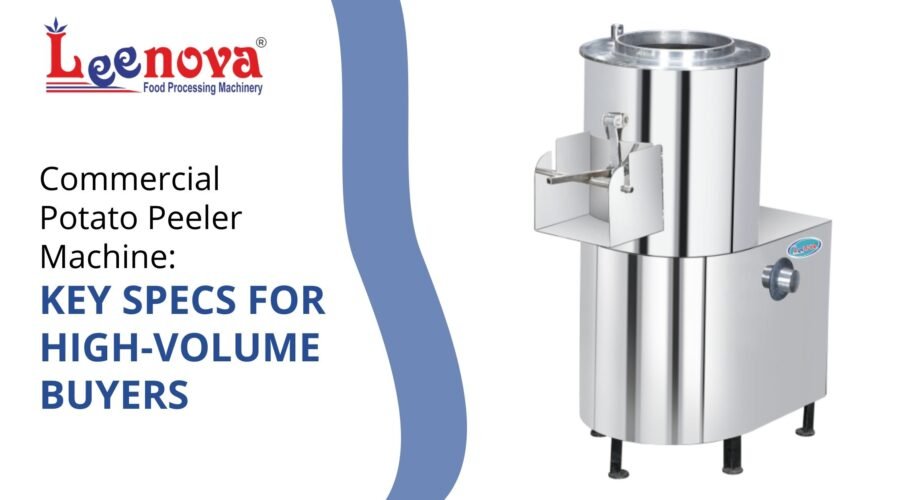
High-volume kitchens waste 18–25% of raw potato weight on manual peeling because knife skills vary, staff rush through prep, and peel thickness becomes inconsistent across shifts. A restaurant processing 100 kg of potatoes daily throws away 18–25 kg of usable flesh—enough for 60–80 extra servings. Labor costs compound the problem: two workers peeling potatoes for 2–3 hours at ₹50–70 per hour drain ₹200–420 daily, and prep delays push lunch service back when orders spike.
A commercial potato peeler machine cuts peeling time to 3–8 minutes per 15–50 kg batch, reduces waste to 8–12% of raw weight, and frees kitchen staff for cooking instead of knife work. The right capacity, motor power, and drum design determine whether your peeler handles peak volume without jamming, maintains consistent skin removal across potato sizes, and survives daily cleaning in a humid, high-traffic prep area.
This guide covers machine types, critical specifications, efficiency metrics, build quality, operational features, and the mistakes that waste money on undersized or poorly designed peelers. You’ll learn how to match capacity to daily throughput, evaluate abrasive drum quality, and calculate real yield savings over manual peeling.
Types of Commercial Potato Peeler Machines
Abrasive Drum Peelers
The most common design for high-volume kitchens and food plants. Potatoes tumble inside a rotating drum lined with abrasive material; friction removes the skin while water flushes peel away through a discharge opening. Batch capacities range from 10 kg to 50 kg; peeling time runs 3–8 minutes depending on potato size and skin thickness.
These machines handle irregular shapes and mixed sizes in one batch, making them ideal for restaurants, caterers, and central kitchens processing multiple potato varieties daily.
Brush Washers and Water-Jet Peelers
Gentler systems that use rotating brushes or high-pressure water jets to remove skin. Yield loss drops to 5–8%, but throughput is slower and potatoes must be pre-sorted by size for even results. Best suited for baby potatoes, new potatoes, or operations where minimizing waste matters more than speed.
Multi-Vegetable Peelers
Drum peelers configured to handle potatoes, carrots, ginger, beets, and other root vegetables. Abrasive surface and drum speed adjust for different skin types. Versatility suits catering kitchens and food processors running varied menus, but switching between vegetables requires thorough cleaning to prevent cross-contamination.
Key Specifications to Compare
Batch Capacity
Measured in kg per batch or kg per hour. A 15 kg machine processes 15 kg of potatoes in 5–6 minutes, delivering ~150 kg per hour if you load, peel, and unload continuously. A 30 kg unit handles 30 kg per batch in 6–8 minutes, yielding 225–300 kg per hour. High-volume operations processing 200+ kg daily need 30–50 kg capacity to avoid running the machine non-stop and burning out the motor.
Motor Power
Ranges from 1 HP (750 W) for 10–15 kg machines to 2–3 HP (1.5–2.2 kW) for 30–50 kg units. Underpowered motors stall when the drum fills with large potatoes or when abrasive material wears down and increases friction. Oversized motors consume unnecessary electricity and generate excess heat in enclosed kitchens.
Peeling Time
Typically 3–8 minutes per batch depending on potato variety, skin condition, and desired peel thickness. New potatoes with thin skins peel in 3–4 minutes; older storage potatoes with thick, tough skins need 6–8 minutes. Machines with timers prevent over-peeling, which wastes flesh and creates mushy surfaces that oxidize faster.
Dimensions and Weight
A 15 kg peeler measures ~500×500×900 mm and weighs 40–50 kg. A 50 kg unit spans ~700×700×1100 mm and weighs 80–120 kg. Floor space, door width, and ceiling height in prep areas determine which models fit without blocking workflow or requiring structural changes.
Peeling Efficiency and Yield
Commercial peelers remove 8–15% of raw potato weight as peel and surface flesh. Manual peeling typically wastes 18–25% because knife angles vary and workers over-peel to ensure complete skin removal. On a 100 kg daily load, switching from manual to machine peeling recovers 10–12 kg of usable potato—worth ₹300–500 in ingredient cost and 30–40 extra servings.
Peel thickness depends on abrasive coarseness and peeling duration. Coarse abrasives (60–80 grit) remove thick peels fast but damage potato surfaces; fine abrasives (100–120 grit) deliver smooth finishes with less waste but take longer. Adjustable timers let you dial in the right balance for each potato batch.
Material and Build Quality
Stainless Steel Construction
Full SS304 or SS316 bodies, drums, and discharge chutes resist rust, withstand daily washing with detergent and hot water, and meet food safety standards. Machines with mild steel frames or painted interiors corrode within 12–18 months in humid kitchens and contaminate product with rust flakes.
Abrasive Drum Quality
Abrasive lining should be replaceable and rated for 500–1,000 kg of throughput before wearing smooth. Low-quality abrasives lose grit within 200–300 kg, forcing you to run longer peeling cycles that waste flesh and increase electricity costs. Replacement drum linings cost ₹1,500–4,000 depending on size.
Hygienic Design
Smooth internal surfaces with no dead zones where peel or starch can accumulate. Removable drums or wide access doors simplify daily cleaning and reduce bacterial buildup. Machines requiring disassembly for cleaning waste 20–30 minutes per shift and increase downtime risk.
Operational Features for High-Volume Use
- Top-loading hoppers speed up batch loading; side-loading designs require bending and slow throughput.
- Bottom discharge valves or chutes empty peeled potatoes in 10–15 seconds without manual scooping.
- Water inlet connections and spray nozzles flush peel continuously during operation, preventing clogging and improving efficiency.
- Safety interlocks cut power when the lid opens, protecting operators from rotating drums.
- Timers and auto-shutoff prevent over-peeling and let staff multitask during peeling cycles.
Common Mistakes Buyers Make
Buyers choose capacity based only on average daily volume, ignoring peak-hour demand during lunch or dinner service when 50–70 kg of potatoes need processing in 30–40 minutes. A 15 kg machine runs four batches to meet that load, occupying staff for peeling, loading, and unloading when they should be plating orders.
Ignoring potato variety leads to mismatched abrasive coarseness—fine abrasives fail to peel thick-skinned varieties; coarse abrasives shred thin-skinned new potatoes. Overlooking cleaning design creates daily friction: machines with narrow openings or non-removable drums force staff to scrub blind, leaving starch deposits that harbor bacteria and shorten equipment life.
Frequently Asked Questions
Q: What capacity potato peeler do I need for a restaurant serving 200 meals daily?
A: Estimate 150–200 grams of potato per meal = 30–40 kg daily potato volume. A 20–30 kg per batch machine handles this in 2–3 runs, leaving capacity for peak days and menu variety.
Q: How often does the abrasive drum need replacement?
A: Every 500–1,000 kg of throughput for standard machines, or roughly 4–8 weeks in a high-volume kitchen processing 100+ kg daily. Inspect monthly; replace when peeling time increases by 30–40% or skin removal becomes patchy.
Q: Can one machine peel both potatoes and carrots?
A: Yes, but clean thoroughly between products to prevent starch transfer and flavor contamination. Adjust peeling time—carrots typically need 4–5 minutes vs 5–7 minutes for potatoes of similar size.
Q: What power supply is required?
A: Most 15–20 kg machines run on single-phase 220V; 30–50 kg units need three-phase 415V supply. Verify kitchen electrical capacity before ordering to avoid expensive panel upgrades.
Q: How much water does a potato peeler use per batch?
A: 2–5 liters per batch for flushing peel and rinsing potatoes. Continuous-flow models use 10–15 liters per hour but deliver better peel removal and faster throughput.
Leenova Kitchen Equipments supplies commercial potato peeler machines built for Indian restaurant kitchens, catering operations, and food-processing units—stainless steel construction, batch capacities from 10 kg to 50 kg, efficient abrasive drums, and user-friendly controls that handle daily high-volume prep without breakdowns. Visit leenovakitchenequipments.com or contact us for capacity recommendations, utility setup guidance, and pricing tailored to your kitchen workflow and peak-demand requirements.