

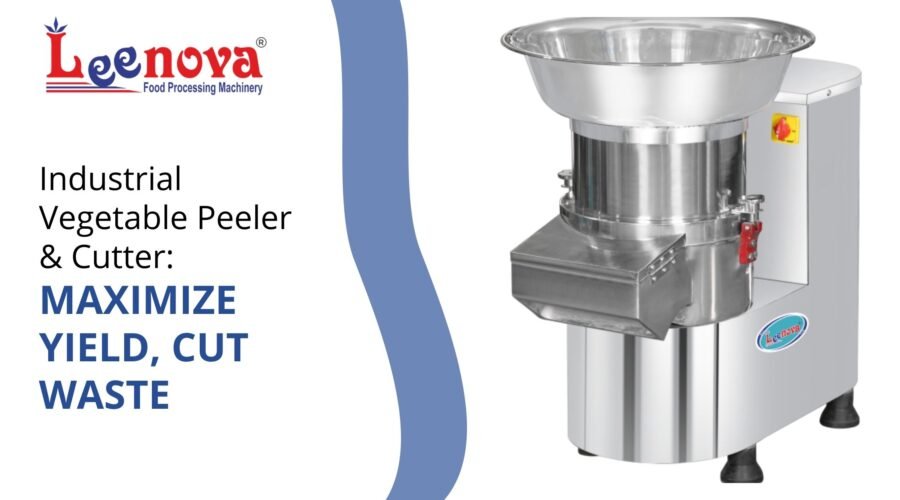
Manual vegetable prep in commercial kitchens typically wastes 18-25% of raw material through over-peeling, uneven trimming, and inconsistent portioning. A cook peeling 50 kg of potatoes manually removes 12-15 kg as waste; an industrial peeler extracts the same usable product with just 8-10 kg loss—a 30-40% improvement in yield. That difference compounds across thousands of kilograms monthly, turning waste into margin. Industrial vegetable peeler and cutter machines automate both steps, delivering uniform peel thickness, consistent cut sizes, and measurable cost savings. This guide explains how these machines work, the capacity bands that match different operations, which features actually improve yield versus marketing claims, and how to calculate payback periods based on your current vegetable spend and waste rates.
Understanding Industrial Vegetable Peeler & Cutter Machines
Two main categories dominate commercial operations. Standalone peelers handle root vegetables using abrasive drums or water jets, processing 20-1000 kg per batch. Combination peeler-cutters integrate washing, peeling, slicing, and dicing in continuous lines for food processing plants.
Semi-automatic designs require manual loading but automate the peeling and cutting cycles. Fully automatic systems add conveyors, sensors, and programmable settings for hands-off operation. The automation jump adds ₹80,000-₹2,50,000 to equipment cost but cuts labor by 50-70% at volumes exceeding 300 kg/day.
Key Features That Drive Efficiency
Abrasive vs Blade Peeling
Abrasive drum peelers tumble vegetables against carborundum-lined surfaces, removing skin through friction. They handle irregular shapes well but remove 2-3mm depth versus 1-1.5mm for blade-based systems. Water jet peeling uses high-pressure streams (80-100 bar) to blast skins off, achieving the thinnest removal at 0.8-1.2mm but requiring specialized equipment costing 3-5x more.
Build Material and Durability
Industrial peelers must use SS304 minimum; potato and beetroot acids corrode mild steel within 12-18 months. Drum interiors take severe abrasion—expect carborundum surface renewal every 18-24 months at ₹8,000-₹15,000 per resurfacing. Cutting blades in combination units need stainless steel construction; carbon steel dulls 60% faster when processing acidic vegetables like tomatoes.
Capacity and Output Planning
Matching Daily Volume to Machine Size
Peelers sized by batch capacity:
- 10-20 kg/batch: Small restaurants, cafeterias processing 50-100 kg daily
- 20-50 kg/batch: Hotels, catering processing 150-400 kg daily
- 50-100+ kg/batch: Food plants, central kitchens exceeding 500 kg daily
Cutters sized by hourly throughput follow the same bands as standalone units: 50-100 kg/hr, 100-300 kg/hr, 300-1000+ kg/hr. Combination machines usually rate lower because peeling is the bottleneck—a unit marketed as “200 kg/hr cutting” often delivers 120-150 kg/hr when peeling is included.
Maximizing Yield and Minimizing Waste
Peel Thickness Control
Manual peeling removes 15-20% of root vegetable weight; industrial abrasive peelers target 8-12%; water jet systems achieve 6-8%. At ₹30/kg for potatoes, a kitchen processing 200 kg daily saves ₹1,800-₹2,400 monthly just from reduced peel waste. That’s ₹21,600-₹28,800 annually—often enough to pay for a mid-range peeler within 18-24 months.
Portion Control Through Uniform Cutting
Hand-cut vegetables vary 30-50% in size, creating uneven cooking and plating waste. Machines hold ±2-3mm tolerances, ensuring french fries, potato cubes, and sliced onions cook uniformly. Less variance means fewer burnt or undercooked pieces discarded during service—typically 5-8% waste reduction versus manual prep.
Practical Usage Scenarios
Small to Mid-Scale Kitchens
Restaurants processing 80-300 kg daily benefit from 20-30 kg/batch peelers paired with semi-automatic cutters. Load potatoes, set timer (3-5 minutes), transfer to cutter, select blade, process. Total time: 8-10 minutes per 20 kg batch versus 35-40 minutes manual. Staff reassignment to value-adding tasks (cooking, plating) often matters more than direct labor savings.
Food Processing Plants
High-volume operations need continuous peelers feeding directly into slicers/dicers. These integrated lines run 6-8 hours without stopping, processing single vegetables in 500-2000 kg batches. Automation justifies itself through consistent output quality that meets retail packaging standards, not just labor reduction.youtube
Blade Types and Cutting Options
Combination peeler-cutters offer interchangeable blade sets:
- Slicing discs: 1-10mm adjustable thickness for chips, wafersyoutube
- Dicing grids: 5-20mm cubes for curries, roasting
- French fry cutters: 6-12mm stripsyoutube
- Julienne blades: 2-4mm matchsticks for salads, garnish
Blade-change time separates good from poor designs. Tool-free cassette systems swap in 45-60 seconds. Bolt-on blades requiring spanners take 5-8 minutes and slow multi-SKU operations significantly.
Automation and Operator Considerations
Training Requirements
Semi-automatic peelers need 20-30 minutes of instruction: load quantity, timer settings, discharge timing. Combination units add blade selection and safety interlocks—45-60 minutes total. Fully automatic continuous lines require 2-3 hours covering sensors, emergency stops, and basic troubleshooting.
Safety and Compliance
Industrial peelers and cutters must include:
- Emergency stop buttons within 2-meter reach
- Interlock switches preventing operation with open access doors
- Overload cutoffs for motor and drive protection
- Guarding around rotating drums and blades
These features are non-negotiable in commercial settings—liability and worker safety laws demand them.
Calculating Your Capacity Needs
A simple estimation method:
- Track one week of vegetable purchases by type
- Separate root vegetables needing peeling (potato, beetroot, carrot, radish)
- Calculate daily kg average
- Add 15-20% buffer for peak days and growth
- Match to machine batch or hourly capacity
Divide daily kg by 5-6 working hours, not 8-10. Peeling happens in concentrated prep windows, not spread evenly. A kitchen using 150 kg potatoes daily across breakfast and lunch prep needs 25-30 kg/hr capacity, best served by a 30 kg/batch peeler used 5-6 times.
Frequently Asked Questions
Q: Do industrial peelers work on all vegetables?
A: Abrasive drum peelers handle hard-skinned root vegetables well (potato, sweet potato, beetroot, radish, carrot) but damage soft items like tomatoes. Water jet systems peel a wider range including onions and ginger. Most combination units pair peelers for roots with separate cutters for mixed vegetables.
Q: How much water do peelers consume?
A: Abrasive drum peelers use 15-25 liters per 10 kg batch for rinsing and cooling. Water jet systems consume 200-400 liters per 100 kg processed. Factor water costs and drainage capacity into operating budgets—high-volume plants may need water recirculation systems to control expense.
Q: What maintenance do these machines need?
A: Daily: rinse drums, clean discharge chutes, wipe controls. Weekly: inspect blades for sharpness, check drain screens. Monthly: lubricate bearings, inspect belts. Annual: resurface abrasive drums, replace worn seals. Budget 8-12% of purchase price yearly for maintenance and consumables.
Q: Can I process multiple vegetable types without cleaning between batches?
A: Not recommended. Flavour transfer happens—potatoes peeled after beetroot develop pink tints. Starch from potatoes gums up blades used next on tomatoes. Quick rinses (2-3 minutes) between vegetable families prevent quality issues.
Conclusion
Industrial vegetable peelers and cutters pay for themselves through waste reduction and portion control before labor savings even enter calculations. Map your daily root vegetable volume and target 8-12% peel waste versus your current manual rate to estimate payback.
Leenova Kitchen Equipments manufactures industrial vegetable peelers and combination peeler-cutters from 20 kg/batch semi-automatic units to continuous systems handling 300+ kg/hr. Built with food-grade stainless steel, practical controls, and yield-focused designs, Leenova equipment helps commercial kitchens and food processors cut waste, standardize portions, and reduce prep labor. Contact the team with your daily vegetable volume and primary items processed—Leenova will recommend peeler capacity, cutting options, and configuration that matches your operation and delivers measurable waste reduction within the first quarter.