

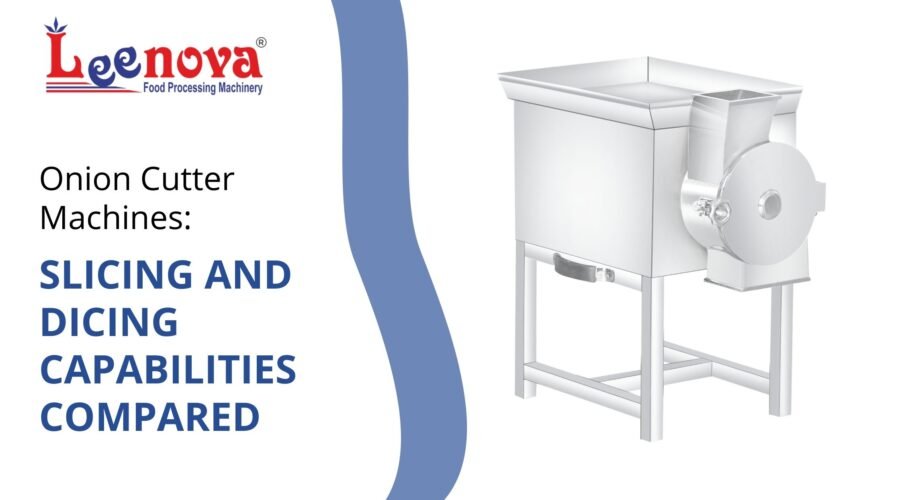
Introduction
Most commercial kitchens buy onion cutters based on price and capacity alone, then discover the machine can’t deliver the cut styles their menu requires. A slicer produces uniform rounds perfect for burgers but useless for curries. A dicer creates cubes ideal for stir-fries but can’t handle the thin rings needed for salads. Buying the wrong type means staff still do 40-60% of cutting by hand, defeating the automation investment.
The difference between slicing and dicing isn’t just blade configuration—it affects prep speed, waste percentages, menu versatility, and maintenance requirements. Multi-function machines promise both capabilities but often compromise on precision or throughput. The right choice depends on actual menu analysis, not generic “we cut onions” assumptions.
This guide breaks down how slicing and dicing mechanisms work, compares output quality and speed, explains multi-function capabilities, and shows how to match machine type to menu requirements. Make this decision correctly and one machine handles 90% of onion prep across all recipes.
How Slicing Mechanisms Work
Basic Cutting Action
Onion slicers use single-stage cutting: push or press onions through a fixed blade grid. Blades arranged in parallel create uniform slices in one motion. Thickness adjustment typically ranges from 2mm to 20mm by changing blade spacing or grid plates.
Manual versions require hand-operated levers. Semi-automatic models use electric motors to activate pressing mechanisms. Industrial units feed onions continuously through automated blade arrays.
Output Characteristics
Slicers produce:
- Circular or semi-circular slices depending on onion orientation
- Uniform thickness across each slice (±0.5mm variance)
- 50-150 kg/hr for manual/semi-auto units
- 400-1000 kg/hr for industrial continuous-feed systems
Best applications: burgers, sandwiches, salads, grilled preparations, and any recipe requiring intact onion rings.
How Dicing Mechanisms Work
Multi-Stage Cutting Process
Onion dicers use sequential cutting in two or three stages:
- First stage: slice onion into planks of target thickness
- Second stage: cut planks into sticks/strips
- Third stage: cross-cut strips into cubes
This multi-stage action requires more complex blade arrangements and stronger motors than simple slicing.
Output Characteristics
Dicers produce:
- Cube-shaped pieces in uniform sizes (4mm, 6mm, 10mm, 15mm, 20mm common)
- Slightly higher waste (12-15%) due to multi-stage cutting versus 8-12% for slicing
- 50-100 kg/hr for manual/semi-auto models
- 500-1000 kg/hr for industrial automated units
Best applications: curries, stir-fries, sauces, salsas, garnishes, and recipes requiring small uniform pieces.
Comparing Slicing vs Dicing Performance
Speed and Throughput
For the same motor power and automation level:
- Slicers process 20-30% faster due to single-stage cutting
- Dicers take longer but deliver more versatile output
- Multi-function machines switching between modes may require 2-5 minutes changeover time
Waste Percentages
Slicing generates lower waste because:
- Single-pass cutting causes less structural damage
- Circular slices use more of each onion
- Simpler blade contact means fewer torn pieces
Dicing increases waste through:
- Multiple cutting stages creating edge pieces and crumbles
- Small target sizes (4-6mm) generating more offcuts
- Higher blade contact causing structural breakdown
Menu Versatility
Slicing-only machines limit you to:
- Burgers, sandwiches, salads, raw onion applications
- Grilled or roasted onion preparations
Dicing-only machines restrict:
- Plating applications needing onion rings
- Decorative garnishes requiring intact slices
Most commercial kitchens need both cuts across different menu items. The uncomfortable truth: buying two specialized machines often costs less than one compromised multi-function unit.
Multi-Function Capabilities
Blade Interchange Systems
Quality multi-function machines use swappable blade assemblies:
- Slicing grid: single-stage parallel blades
- Dicing grid: multi-stage perpendicular blade arrays
- Julienne grid: creates strips instead of cubes
Changeover time ranges from 2-5 minutes for tool-free systems to 10-15 minutes for bolted assemblies.
Performance Trade-offs
Multi-function machines typically sacrifice:
- 10-15% throughput versus dedicated slicers or dicers
- Blade lifespan (interchangeable systems often use lighter-duty components)
- Precision at extreme settings (very thin slices or very small dice)
These compromises matter less for operations needing both functions at moderate volumes. High-volume kitchens focused on one primary cut style benefit more from dedicated machines.
Build Quality and Durability
Material Standards
All food-contact surfaces must use SS 304 or higher grade stainless steel. Cheaper constructions using SS 202 or aluminum corrode from onion acids within 8-12 months.
Body construction affects longevity:
- Full SS bodies (35-60 kg) withstand daily commercial use for 8-10 years
- Mixed construction (SS blades, powder-coated frames) suitable for 5-7 years moderate use
- Lightweight units (under 20 kg) typically fail within 2-3 years in high-volume operations
Motor and Drive Systems
Slicing requires 0.5-1 HP motors for most commercial applications. Dicing demands 1-2 HP due to multi-stage resistance. Multi-function units need motors sized for the highest-resistance function (dicing) even when slicing.
Matching Machine to Menu Requirements
When to Choose Slicing-Only
Select dedicated slicers if:
- 70%+ of onion use requires slices
- Menu focuses on burgers, sandwiches, salads, grilled items
- Maximum throughput matters more than versatility
- Budget allows adding a second machine later for dicing needs
When to Choose Dicing-Only
Choose dedicated dicers if:
- 70%+ of recipes need cubed onions
- Menu emphasizes curries, stir-fries, sauces, cooked preparations
- Small uniform pieces are critical for even cooking
- Slicing needs are minimal or handled manually without bottlenecks
When Multi-Function Makes Sense
Invest in multi-function machines when:
- Menu requires both slices and dice regularly
- Space or budget prevents buying two machines
- Combined daily volume under 100 kg (specialized machines underutilized)
- Staff can handle 2-5 minute changeover between cutting modes
Maintenance Differences
Cleaning Complexity
Slicers clean faster due to:
- Single blade grid with fewer contact points
- Open design allowing easy access
- 8-10 minute daily cleaning routine
Dicers require more attention because:
- Multi-stage blades create more cleaning zones
- Tighter blade spacing traps debris
- 12-15 minute daily cleaning needed
Blade Replacement Costs
Slicer blades cost ₹1,500-₹3,000 per set and last 3-4 months. Dicer blade assemblies run ₹2,500-₹5,000 and need replacement every 2-3 months due to higher cutting stress.
Multi-function systems require separate blade sets for each cutting mode, doubling the spare parts inventory.
FAQs
Q: Can one machine handle both slicing and dicing effectively?
A: Yes, but with trade-offs. Multi-function machines using interchangeable blade grids deliver both cuts, though typically 10-15% slower than dedicated units. Changeover takes 2-5 minutes. They suit kitchens needing both functions at moderate volumes (under 100 kg daily combined). High-volume operations benefit more from dedicated machines.
Q: What capacity do I need for a 200-seat restaurant using onions in multiple dishes?
A: Estimate 1 kg onions per 8-10 meals served. A 200-seat restaurant needs roughly 150-200 kg weekly. Choose a machine rated for 80-120 kg/hr to complete daily prep (20-30 kg) in 20-30 minutes. Peak prep windows matter more than daily totals.
Q: How often do blades need replacement in commercial use?
A: Slicing blades last 3-4 months processing 50-100 kg daily. Dicing blades wear faster (2-3 months) due to multi-stage cutting stress. Watch for uneven cuts, increased operator effort, and torn pieces as replacement indicators. Budget ₹1,500-₹5,000 per blade set depending on machine type.
Q: What other vegetables can each machine type handle?
A: Slicers work well for tomatoes, cucumbers, carrots, and most firm round vegetables. Dicers handle potatoes, carrots, ginger, chilies, and any vegetable that holds shape when cubed. Multi-function units process the widest range. Each vegetable type affects blade wear differently—hard vegetables accelerate replacement needs.
Conclusion
Choose slicing for burger-heavy menus, dicing for curry-focused operations, or multi-function when both cuts appear regularly. Match machine capacity to peak prep windows, not daily totals. Factor blade replacement costs and cleaning time into the total ownership equation.
Analyze actual menu usage across recipes before deciding. The most expensive mistake is buying based on general “onion cutting” needs rather than specific cut requirements.
Leenova Kitchen Equipments manufactures dedicated slicing machines, dicing systems, and multi-function onion cutters engineered for commercial kitchen demands. Our specification team helps analyze your menu, calculate actual cut-type ratios, and recommend machines that match real prep patterns—not generic categories. Visit leenovakitchenequipments.com or contact us for menu-based machine selection, capacity planning, and ROI analysis specific to your restaurant’s onion usage across all recipes.