

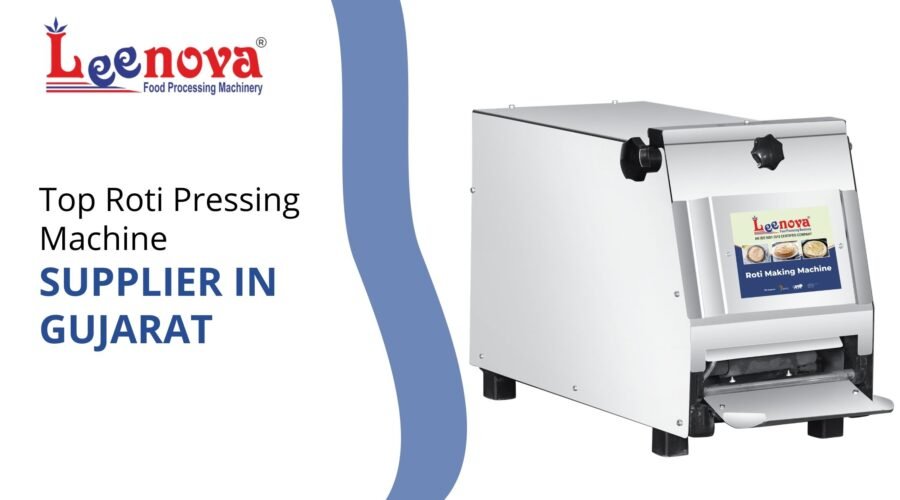
Manual roti making costs commercial kitchens ₹60-80 per hour in labor for a task that produces 40-50 rotis hourly with inconsistent size and thickness. A restaurant serving 200-300 customers daily needs 400-600 rotis across lunch and dinner service, tying up 2-3 staff members for 8-10 hours in rolling alone. The size variation creates cooking problems—thin rotis burn while thick ones stay undercooked, affecting customer satisfaction. A commercial roti pressing machine eliminates these issues entirely. Modern machines produce 600-800 rotis per hour with uniform 6-8 inch diameter and consistent thickness, operated by a single person. Gujarat has emerged as India’s leading hub for commercial kitchen equipment manufacturing, with Rajkot and Ahmedabad hosting major roti machine suppliers serving national and export markets. As a food processing equipment manufacturer based in Gujarat since 2006, we understand the specific requirements of Indian commercial kitchens. This guide explains roti pressing machine types, essential features, capacity matching, pricing factors, and what defines reliable suppliers in Gujarat’s competitive market.youtube
Types of Roti Pressing Machines
Manual Press Machines
Manual roti presses use a lever-operated mechanism to flatten dough balls between two plates. The operator places dough, pulls the handle to press, and lifts the handle to remove the flattened roti. These cost ₹3,000-6,000 and suit very small operations making 100-150 rotis daily.
While called “manual,” these machines still reduce rolling time by 60-70% compared to rolling pins. However, they lack heating elements, requiring separate cooking on tava or griddle.
Semi-Automatic Machines
Semi-automatic roti presses include heated plates that press and partially cook the roti simultaneously. Operators feed dough balls manually, and the machine presses and releases automatically on a timed cycle—typically 8-12 seconds per roti.
These machines produce 200-300 rotis per hour and cost ₹18,000-35,000 depending on plate size and heating capacity. They suit mid-sized restaurants and catering operations.
Fully Automatic Systems
Fully automatic roti makers integrate dough feeding, pressing, cooking, and stacking in one continuous process. Operators load dough balls into a hopper, and the machine handles everything else—pressing, cooking both sides, and delivering finished rotis onto collection trays.
Capacity ranges from 600-1,200 rotis per hour, with prices from ₹85,000-2,50,000 for commercial-grade units. Large hotels, institutional kitchens, and central commissaries use these systems.youtube
Key Features That Matter
Adjustable Thickness Control
Quality machines offer thickness adjustment from 1.5mm to 4mm to accommodate different roti styles—thin roomali rotis, standard phulka thickness, or thicker parathas. This versatility matters for operations serving diverse menus or regional preferences.
Fixed-thickness machines limit menu flexibility and force operations to buy multiple units for different roti types—an unnecessary expense.
Plate Heating Performance
Commercial plates should reach working temperature (180-220°C) within 3-5 minutes of startup. Longer heating times delay service during morning prep and after cleaning breaks.
Even heat distribution across the entire plate surface prevents hot spots that burn roti centers while leaving edges undercooked. Check this by observing color consistency across finished rotis.
Non-Stick Coating Quality
Food-grade non-stick coating prevents dough adhesion and simplifies cleaning. Poor-quality coatings flake within 3-6 months of daily use, requiring plate replacement at ₹3,000-5,000.
Premium machines use reinforced PTFE or ceramic coatings lasting 3-5 years under commercial use conditions.
Safety Features
Essential safety features include:
- Thermal overload protection preventing motor burnout
- Insulated handles staying cool during operation
- Finger guards blocking access to moving plates
- Auto-shutoff after preset idle time
- Stable base with rubber feet preventing slipping
Budget machines skip these features, creating injury risks and liability exposure.
Benefits for Commercial Operations
Labor Cost Reduction
A single operator running a semi-automatic machine produces 250-300 rotis hourly versus 40-50 rotis rolling manually. For operations making 600 rotis daily, machine pressing completes the job in 2-2.5 hours versus 12-15 hours manually.youtube
At ₹70 per hour labor cost, this saves ₹700-875 daily or ₹21,000-26,250 monthly. A ₹25,000 machine recovers its cost in one month of normal operation.
Consistency and Quality
Machine-pressed rotis maintain uniform 6-8 inch diameter and consistent thickness. This improves cooking predictability—all rotis cook in the same time at the same temperature, eliminating the burnt-or-raw problem from size variation.
Customers notice the difference. Uniform rotis look more professional and deliver consistent eating experience that builds repeat business.
Dough Yield Improvement
Manual rolling wastes 8-12% of dough through uneven thickness, torn pieces, and excessive dusting flour. Machine pressing with calibrated thickness settings reduces waste to 2-4%, recovering more usable rotis per kilogram of atta.
At atta costs of ₹40-50 per kg and 600 rotis daily consumption, the 6-8% yield improvement saves ₹150-200 monthly in ingredient costs alone.
Capacity Matching Strategy
Small Operations (100-200 rotis daily)
Restaurants and cafes serving 50-80 customers daily need manual or small semi-automatic presses. A machine producing 200-250 rotis hourly completes daily requirements in 45-60 minutes, fitting easily into standard prep schedules.
Medium Operations (300-600 rotis daily)
Mid-sized restaurants, corporate canteens, and catering services require semi-automatic machines with 250-350 rotis hourly capacity. These handle lunch and dinner service prep in 2-3 hours total, maintaining freshness while avoiding rushed production.
Large Scale (800+ rotis daily)
Hotels, institutional kitchens, temple langars, and high-volume restaurants need fully automatic or multiple semi-automatic units. A 700-800 roti/hour machine completes 1,000 rotis in 75-90 minutes, supporting continuous service throughout meal periods.
Gujarat’s Equipment Manufacturing Hub
Gujarat accounts for 40-45% of India’s commercial kitchen equipment manufacturing, with concentration in Rajkot, Ahmedabad, and Gondal. This clustering creates advantages for buyers—competitive pricing, easy spare parts access, and quick service response.
Rajkot alone hosts 50+ roti machine manufacturers ranging from small workshops to ISO-certified factories exporting globally. The competition drives innovation while keeping prices 15-20% below equivalent equipment from other states.
Supplier Selection Criteria
Manufacturing vs Trading
Direct manufacturers offer better pricing, customization options, and reliable warranty service. Traders add 20-30% margin while providing limited technical support or spare parts access.
Ask for factory visit opportunities. Legitimate manufacturers welcome inspection of production facilities; traders cannot provide this.
After-Sales Support
Roti machines require periodic maintenance—plate replacement, heating element checks, and mechanical adjustments. Suppliers offering local service networks or responsive phone support reduce downtime from days to hours.
Warranty coverage reveals supplier confidence. One-year comprehensive warranty indicates quality construction; 3-6 months or parts-only warranty signals components that fail frequently.
Spare Parts Availability
Common replacement parts—heating elements, thermostats, pressing plates, and springs—should be readily available. Suppliers maintaining adequate spare parts inventory prevent extended downtime waiting for components.
Proprietary designs using non-standard parts create long-term dependency and inflated maintenance costs.
Price and Value Assessment
Manual presses start at ₹3,000-6,000 for basic models. Semi-automatic machines range ₹18,000-35,000 depending on capacity and features. Fully automatic systems cost ₹85,000-2,50,000.
The cheapest option rarely delivers best value. Machines costing 30-40% below market average typically use inferior materials, weak motors, and poor-quality non-stick coatings that fail within months.
FAQs
Q: What capacity roti pressing machine do I need for a 100-seat restaurant?
A: A 100-seat restaurant typically serves 150-200 customers daily, requiring 400-500 rotis. A semi-automatic machine producing 250-300 rotis hourly completes this in 1.5-2 hours, providing adequate capacity with a buffer for busy days.
Q: How long do roti pressing machines typically last?
A: Quality commercial roti presses last 8-12 years with proper maintenance. The pressing mechanism itself is durable; heating elements and non-stick coatings require replacement every 3-5 years depending on usage volume and cleaning practices.
Q: Can roti machines handle different dough types?
A: Yes, good machines press wheat atta, maida, besan, millet flour, and mixed grain doughs effectively. Adjust thickness settings and heating temperature for different dough consistencies—softer doughs need gentler pressing than firm whole wheat dough.
Q: What electrical requirements do commercial roti presses have?
A: Semi-automatic machines typically require 1.5-2 kW power on single-phase 220V supply. Fully automatic systems may need 3-4 kW and sometimes three-phase 440V power. Verify your kitchen’s electrical capacity before purchasing.
Q: Why are Gujarat-made roti machines more affordable?
A: Gujarat’s concentrated manufacturing ecosystem creates economies of scale, reduces logistics costs, and drives competitive pricing. The 15-20% price advantage compared to other states comes from manufacturing efficiency, not compromised quality.
Conclusion
Roti pressing machines cut labor time by 75-80%, deliver consistent size and thickness, reduce dough waste by 6-8%, and pay back their cost within 1-2 months for most commercial operations. Gujarat’s manufacturing expertise provides quality equipment at competitive prices with accessible service support.
Leenova Kitchen Equipments, based in Gujarat since 2006, manufactures commercial roti pressing machines designed for Indian kitchen requirements. Our range includes manual presses for small operations and semi-automatic models producing 250-300 rotis per hour for mid-sized restaurants and catering services.
We focus on practical features: adjustable thickness control (1.5-4mm), quick-heating plates reaching temperature in 3-5 minutes, durable non-stick coating, and safety mechanisms including thermal protection and stable bases. Our machines handle wheat atta, maida, besan, and mixed grain doughs effectively.
All units come with one-year comprehensive warranty covering parts and service. We maintain spare parts inventory for quick replacement and provide phone support for troubleshooting and maintenance guidance.
Ready to eliminate manual roti rolling from your kitchen workflow? Contact Leenova Kitchen Equipments today for specifications, pricing, and delivery information on roti pressing machines built for commercial reliability and consistent daily performance.