

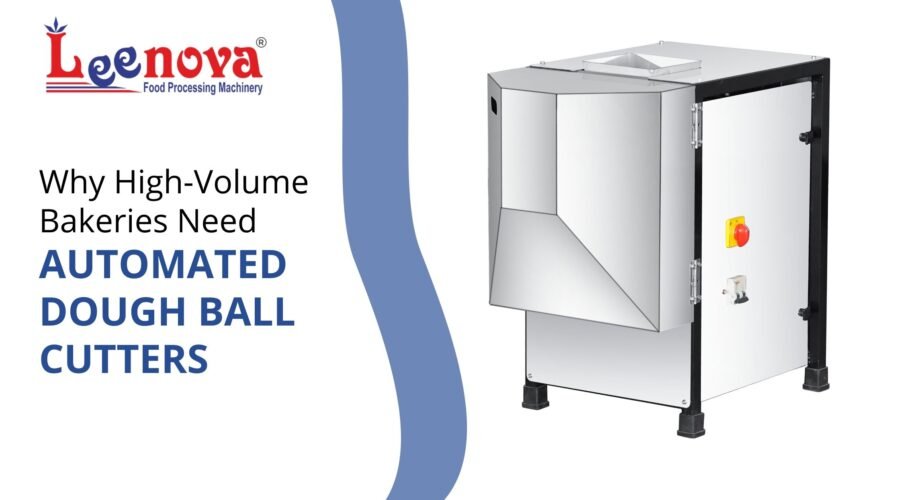
Manual dough portioning is where most scaling bakeries hit their ceiling. A skilled worker shapes 200-250 pav balls per hour, but consistency suffers—portions vary 10-15g, creating uneven baking and customer complaints about “today’s pav being smaller”. When daily demand crosses 2,000-3,000 pieces, bakeries need 8-10 hours of dedicated hand-shaping labor, tying up workers who could handle finishing, packing, or customer service. Automated dough ball cutters eliminate this bottleneck, producing 500-4,000 uniform portions per hour with ±2% weight accuracy. This guide explains why high-volume operations can’t scale without automation, how to match machine capacity to production targets, which features actually matter versus marketing claims, and the hidden ROI factors that make payback faster than most buyers expect.
The Problem with Manual Dough Division
Time and Labor Constraints
Hand-shaping 1,000 pav balls takes 4-5 hours for an experienced baker. During festival seasons or catering orders, that timeline compresses—bakeries run double shifts or turn down orders because shaping capacity maxes out. Labor costs compound: paying ₹15,000-₹20,000 monthly per shaping worker means ₹1,80,000-₹2,40,000 annually for the manual bottleneck.
Inconsistent Product Quality
Manual portions vary even among skilled bakers. A target 50g pav ball ranges 42-58g in practice—enough difference that smaller pieces overbake while larger ones stay doughy. Customers notice. Chain bakeries and supermarket suppliers face rejection rates of 8-12% on manual-portioned products due to size variance.
Key Benefits of Automated Dough Ball Cutters
Weight Accuracy and Uniformity
Automated cutters hold ±1-2g tolerances across thousands of pieces. That precision translates to consistent baking times, predictable yield calculations, and zero customer complaints about size variation. For products sold by count rather than weight (burger buns, slider rolls), this accuracy protects margins—manual over-portioning costs 3-5% in giveaway waste.
Production Speed
Entry-level semi-automatic machines produce 500-1,000 pcs/hr. Mid-range units hit 1,500-2,500 pcs/hr. High-capacity automated lines reach 3,000-4,000+ pcs/hr. A 2,000 pcs/hr machine replaces 8-10 manual workers and completes daily production in 2-3 hours instead of full shifts.
Labor Reallocation
One operator monitors the machine, loads dough sheets, and collects formed balls. The 2-3 workers previously hand-shaping move to value-adding tasks: filling, glazing, decorating, or packing. This shift often matters more than direct labor savings—skilled bakers focus on craft rather than repetitive portioning.
Capacity Planning for High-Volume Bakeries
Matching Daily Output to Machine Speed
Calculate backwards from daily piece count, not forward from machine specs. A bakery producing 6,000 pav daily needs:
- 6,000 pieces ÷ 3 operating hours = 2,000 pcs/hr minimum capacity
- Add 20-25% buffer for cleaning, dough changeovers, and maintenance
- Target machine: 2,500-3,000 pcs/hr rated capacity
Buyers often underestimate cleaning and changeover time. Switching from 40g dinner rolls to 60g burger buns takes 8-12 minutes for settings adjustment and test runs. Factor 30-45 minutes daily downtime when sizing capacity.
Capacity Bands by Operation Type
- Local bakeries (1,000-3,000 pcs/day): 500-1,000 pcs/hr semi-automatic units
- Regional suppliers (4,000-10,000 pcs/day): 1,500-2,500 pcs/hr automatic machines
- Large plants (15,000+ pcs/day): 3,000-4,000+ pcs/hr continuous lines
The crossover point where automation pays back in under 12 months is around 2,000-2,500 pieces daily. Below that, semi-automatic units offer better ROI than fully automated systems.
Machine Features That Matter
Adjustable Weight Settings
Quality machines handle 15-110g per ball with digital precision controls. This range covers slider buns (15-20g), pav (40-50g), burger buns (60-70g), and pizza dough balls (80-110g) on the same equipment. Mechanical-only adjustment systems drift 3-5g during long runs; digital servo controls maintain specs all day.
Build Quality and Hygiene
Stainless steel construction (SS304 minimum) matters for dough contact surfaces, which see moisture, oils, and repeated cleaning. Painted mild steel frames rust and flake within 18-24 months in commercial bakeries. The SS premium costs ₹25,000-₹40,000 but extends machine life from 4-5 years to 10-12 years.
How Automated Dough Ball Cutters Work
Most designs follow a three-stage process:
- Feeding: Dough sheets (rolled to target thickness) feed into the cutting zone manually or via conveyor
- Cutting: Rotary blades or press-cut mechanisms portion sheets into individual pieces
- Rounding: Each piece passes through rounding plates or rollers that shape rough cuts into smooth balls
Semi-automatic models require manual sheet feeding and ball collection. Fully automatic systems add conveyors for hands-free operation from dough sheet to proofing tray.
Applications in Bakery Production
Bread Products
Automated cutters excel at high-volume items:
- Dinner rolls, slider buns, hot dog buns (15-40g)
- Pav for pav bhaji, vada pav, dabeli (40-50g)
- Burger buns, sandwich rolls (60-80g)
- Pizza and flatbread dough balls (80-110g)
Production Environments
The technology suits operations where:
- Daily production exceeds 1,500-2,000 pieces
- Product range includes 3-5 different portion sizes
- Labor availability or turnover creates staffing challenges
- Quality consistency matters for retail or wholesale contracts
Cost and ROI Analysis
Investment vs Savings
Entry semi-automatic dough ball cutters cost ₹1,20,000-₹2,50,000. Fully automatic units range ₹3,50,000-₹7,50,000. Compare against:
- Labor saved: ₹1,80,000-₹2,40,000 annually (2-3 workers)
- Waste reduction: 3-5% improved dough yield = ₹30,000-₹60,000 annually for bakeries using 2,000 kg flour monthly
- Capacity expansion: ability to accept 40-50% more orders without hiring
Payback periods run 12-18 months for operations over 2,500 pcs/day, 18-30 months below that threshold.
Common Mistakes When Buying Dough Ball Cutters
Oversizing capacity because “we might expand” creates three problems. First, larger machines cost significantly more—a 3,000 pcs/hr unit runs ₹2-3 lakh above a 1,500 pcs/hr model. Second, cleaning time scales with machine size; oversized equipment takes 35-45 minutes versus 20-25 minutes for right-sized units. Third, running at 30-40% capacity increases wear because mechanisms designed for continuous load perform poorly when underutilized.
Ignoring adjustable weight range limits product flexibility. Single-setting machines lock bakeries into one portion size; adding new products requires new equipment. Verify the full weight span (not just center range) and confirm adjustment ease—some designs need tool changes for different sizes.
Frequently Asked Questions
Can automated dough ball cutters handle different dough types?
Most machines work with lean doughs (pav, buns, rolls) and enriched doughs (brioche-style products) at 55-65% hydration. Very wet pizza doughs (70%+) or stiff bagel doughs (50-52%) require specialized equipment. Sticky or oily doughs may need Teflon-coated cutting surfaces.
What maintenance do these machines need?
Daily: wipe cutting blades, clean dough residue from rounding plates (10-15 minutes). Weekly: lubricate moving parts, inspect blade sharpness. Monthly: check belt tension, clean drive mechanisms. Annual: blade replacement (₹8,000-₹15,000), bearing service. Budget 6-8% of purchase price yearly for maintenance.
How accurate are the portion weights?
Quality machines hold ±1-2g at target weights, roughly ±2-3% variance. Manual portioning by skilled bakers averages ±8-10%. The accuracy gap compounds over thousands of pieces—a 50g target produces 48-52g machine-cut versus 42-58g hand-shaped balls.
Do I need three-phase power for these machines?
Small machines (500-1,000 pcs/hr) run on single-phase 220-240V. Units above 1,500 pcs/hr typically require three-phase 415V for motor reliability during extended runs. Confirm electrical specs before purchase—adding three-phase infrastructure costs ₹40,000-₹80,000 if not already available.
What’s the learning curve for operators?
Semi-automatic machines: 1-2 hours for confident operation, covering dough sheet thickness, weight adjustment, feeding rhythm, and basic troubleshooting. Fully automatic systems: 3-4 hours including conveyor speed synchronization and sensor calibration. Most bakeries reach full efficiency within 3-5 operating days.
Conclusion
Automated dough ball cutters stop being optional when daily production crosses 2,000 pieces. Calculate your daily piece count, identify target portion weights, and match to equipment capacity with realistic downtime buffers. Share your production volumes to get specific machine recommendations.
Leenova Kitchen Equipments manufactures automated dough ball cutting machines from 500 pcs/hr semi-automatic models to 3,000+ pcs/hr fully automatic systems, all built with food-grade stainless steel and adjustable weight settings (15-110g per ball). Designed for Indian bakery operations producing pav, buns, rolls, and pizza bases, Leenova machines deliver ±2% weight accuracy, fast changeover between portion sizes, and practical operator controls. With responsive service support and spare parts availability, Leenova helps bakeries scale from local production to regional distribution without hiring bottlenecks or quality compromises. Contact the technical team with your daily piece count, portion weights, and product mix—Leenova will recommend capacity and features that match your growth targets and deliver measurable ROI within the first year.