

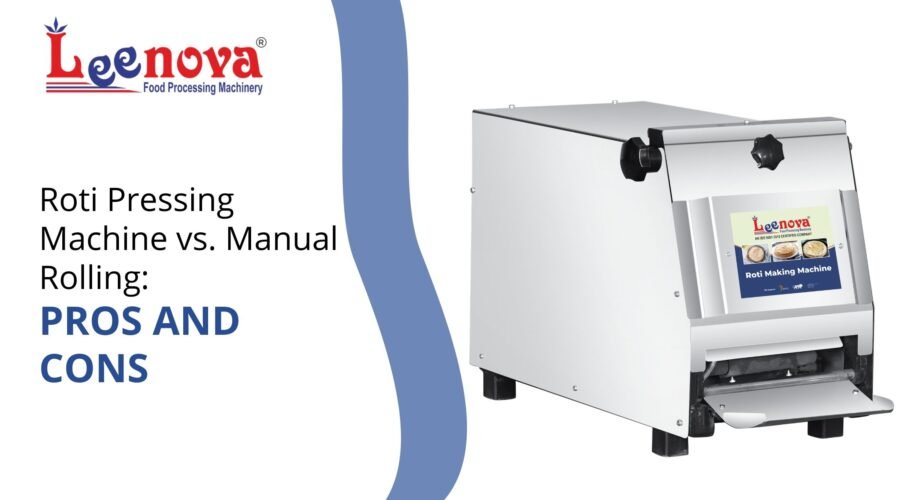
A skilled roti maker produces 25-35 rotis per hour—adequate for a small dhaba but disastrous for a restaurant serving 200 covers during lunch rush. Manual rolling also creates thickness variation of 1-2mm, enough to leave some rotis doughy while others crisp up unevenly. As orders grow, kitchens hire 3-4 roti makers just to keep pace, paying ₹15,000-₹25,000 monthly per worker for repetitive strain that drives 40-50% annual turnover. Roti pressing machines shift this equation dramatically: even basic models produce 100-200 rotis hourly with uniform thickness, while fully automatic lines hit 500-700 rotis per hour. This comparison breaks down production capacity, quality consistency, labor requirements, cost analysis, and real-world applications to help you decide when manual rolling makes sense and when pressing machines become essential for scaling operations without hiring bottlenecks.
Manual Rolling: Strengths and Limitations
What Manual Rolling Does Well
Hand-rolling offers tactile control that skilled makers use to adjust thickness mid-process, compensating for dough hydration differences. This flexibility suits regional roti variations—thicker Punjabi rotis, paper-thin roomali rotis, or paratha layers all come from the same dough batch. No upfront equipment cost beyond rolling pins and boards makes manual rolling the default for operations under 200-300 rotis daily.
Where Manual Rolling Fails
Physical strain limits output. Rolling 500 rotis demands 5-6 hours of continuous work, creating wrist and shoulder fatigue. Thickness inconsistency becomes visible at scale—batches vary 20-30% in cooking time, forcing cooks to pull rotis individually rather than in synchronized batches. Labor dependency creates operational fragility; one absent roti maker can collapse lunch service.
Roti Pressing Machine: Advantages and Drawbacks
Why Pressing Machines Excel
Commercial pressing machines deliver:
- Speed: 100-200 rotis/hr for semi-automatic, 300-700/hr for fully automatic lines
- Uniformity: ±0.2-0.3mm thickness tolerance versus ±1-2mm manual
- Labor reduction: 1 machine operator replaces 3-5 manual rollers
- Reduced strain: Eliminates repetitive stress injuries common among roti makers
Pressing consistency means every roti cooks identically—critical for buffet service, catering, and cloud kitchens where timing matters.
Where Machines Fall Short
Equipment investment runs ₹25,000-₹1,50,000 depending on capacity and automation level. Daily cleaning adds 15-25 minutes versus 3-5 minutes for rolling pins. Machines struggle with very wet doughs (over 65% hydration) or layered parathas requiring hand-folding techniques. Some customers perceive machine rotis as “less authentic,” though blind taste tests show no detectable difference in properly made rotis.
Production Capacity Comparison
Manual Rolling Output
A skilled worker produces:
- 25-35 standard rotis per hour sustained
- 200-250 rotis per 8-hour shift with breaks
- 600-750 rotis daily using 3 workers across shifts
This linear scaling means 1,000 daily rotis require 4-5 dedicated rollers—not counting sick days or turnover.
Machine Pressing Output
Semi-automatic pressers (manual dough placement, mechanical pressing):
- 100-200 rotis/hr with 1 operator
- 800-1,600 rotis per 8-hour shift
Fully automatic lines (conveyor feed, pressing, and discharge):
- 300-700 rotis/hr depending on model
- 2,400-5,600 rotis per 8-hour shift
The crossover point where machines outperform manual labor economically sits around 400-500 rotis daily.
Quality and Consistency
Thickness Control
Manual rolling produces 1.5-3mm thickness with ±1-2mm variance across batches. Thicker spots stay doughy; thinner areas overcook and harden. Machine pressing holds 1.8-2.2mm with ±0.2-0.3mm variance, ensuring even cooking. For operations where consistency defines brand reputation, this precision matters more than raw speed.
Customer Perception
Contrary to popular belief, well-made machine rotis don’t taste different from hand-rolled versions—the differences lie in cooking technique (tawa temperature, timing) rather than shaping method. However, some premium restaurants market “hand-rolled rotis” as a quality signal, charging 15-20% premiums that offset higher labor costs.
Labor and Skill Requirements
Manual Rolling Needs
Finding skilled roti makers grows harder as younger workers avoid repetitive kitchen roles. Monthly salaries of ₹15,000-₹25,000 per worker compound with 40-50% annual turnover rates in metro cities. Training new rollers takes 3-4 weeks before they reach acceptable speed and consistency.
Machine Operation
Semi-automatic pressers need 2-3 hours of training covering dough placement, thickness adjustment, and basic cleaning. Fully automatic lines require 1 day for setup, calibration, and troubleshooting. One operator monitors multiple machines, reassigning labor to cooking, service, or other prep tasks.
Cost Analysis
Initial Investment
- Basic manual press (home-style): ₹3,000-₹8,000
- Commercial semi-automatic presser: ₹25,000-₹60,000
- Fully automatic roti line: ₹80,000-₹1,50,000+
Operating Costs
Electricity for semi-automatic machines runs ₹30-50 daily for 8-hour operation. Maintenance (cleaning, plate resurfacing, heating element checks) costs ₹8,000-₹15,000 annually. Compare against labor: 3 roti makers at ₹18,000/month = ₹6,48,000 annually.
ROI Timeline
Operations producing 600+ rotis daily see payback in 8-14 months through labor savings alone. Add waste reduction (machines use 3-5% less dough through consistent portioning) and faster service during peak hours, and effective payback shortens to 6-10 months.
Applications and Use Cases
When to Stick with Manual
- Daily output under 200-300 rotis
- Artisanal or premium positioning where hand-rolling is a marketing element
- Diverse regional roti styles requiring custom thickness and shapes
- Very small spaces with limited electrical capacity
When to Choose Machines
- Daily production exceeding 400-500 rotis
- Multi-outlet chains needing standardized products
- High-volume catering, institutional kitchens, cloud kitchens
- Labor availability or turnover creating operational risk
Frequently Asked Questions
Do machine rotis taste different from hand-rolled rotis?
No detectable difference in blind taste tests when both are cooked identically. Texture and flavor come from dough quality, cooking temperature, and timing—not shaping method. The “hand-rolled tastes better” belief stems from inconsistent machine operation or poor dough prep, not the pressing itself.
Can roti pressing machines handle different dough types?
Semi-automatic pressers work well with standard atta doughs at 55-60% hydration. Struggle with very wet doughs (over 65%), multigrain doughs with coarse particles, or layered paratha doughs requiring folding. Fully automatic lines with adjustable pressure settings handle wider dough ranges but still can’t replicate complex hand-layering techniques.
How long does daily maintenance take?
Semi-automatic machines: 15-20 minutes for plate cleaning and dough residue removal. Fully automatic lines: 25-35 minutes including conveyor belts and sensor checks. Skipping daily cleaning increases breakdown frequency by 3-4x and shortens plate lifespan significantly.
What’s the actual output in busy service versus advertised capacity?
Advertised capacity assumes continuous feeding and no changeovers. Real-world output runs 70-80% of rated capacity after accounting for dough refilling, thickness adjustments, and cleaning between batches. A 300/hr machine produces 210-240/hr in practice during peak service.
Do I need three-phase power?
Semi-automatic pressers run on single-phase 220-240V. Fully automatic lines with conveyor systems and multiple heating zones typically require three-phase 415V. Confirm electrical specs before purchase—adding three-phase infrastructure costs ₹40,000-₹80,000 if not already installed.
Conclusion
Manual rolling makes sense below 300 rotis daily or when artisanal positioning justifies premium pricing. Above 400-500 rotis daily, pressing machines deliver consistency, speed, and labor savings that pay back investment within a year. Calculate your daily roti count and labor costs to determine your break-even point.
Leenova Kitchen Equipments manufactures commercial roti pressing machines from semi-automatic models for 100-200 rotis/hr to fully automatic systems producing 500-700 rotis/hr. Built with food-grade materials, adjustable thickness controls (1.5-3mm), and efficient heating systems, Leenova pressers help restaurants, caterers, and institutional kitchens scale roti production without hiring bottlenecks. With practical designs focused on easy operation, quick cleaning, and reliable performance during peak hours, Leenova delivers equipment that matches real commercial kitchen demands. Contact the team with your daily roti requirements and kitchen constraints for tailored capacity recommendations and ROI projections.