

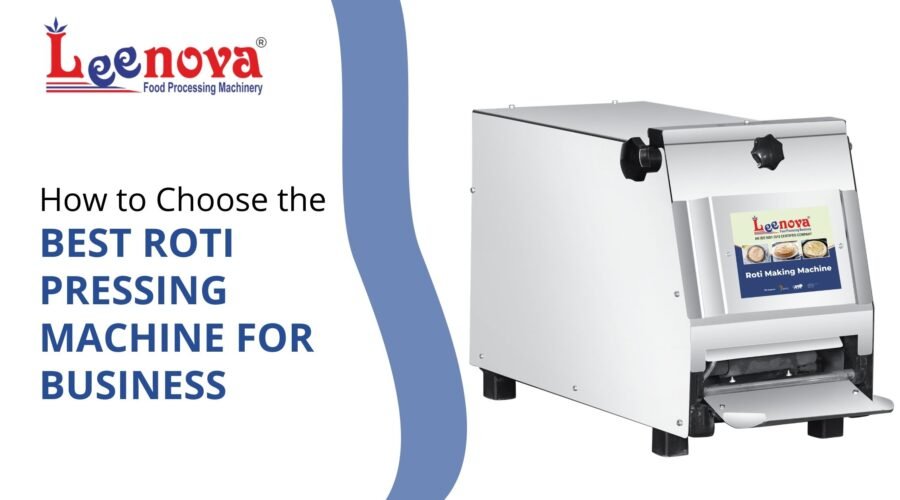
Manual roti rolling costs commercial kitchens 40-50 rotis per hour per worker—a throughput rate that collapses entirely during peak lunch and dinner service. A 100-seat restaurant needing 400 rotis per service shift requires 3-4 dedicated staff just for rolling, and even then, inconsistent thickness creates uneven cooking that generates customer complaints. Most buyers make the mistake of choosing a machine based on price alone, then discover the capacity is too low, the plates warp after three months, or the electrical requirements don’t match their kitchen setup. A well-matched roti pressing machine delivers 300-1,000 uniform rotis per hour with one operator. As Gujarat-based food equipment manufacturers since 2006, we supply roti pressing machines to restaurants, canteens, hotels, and catering operations across India. This guide covers machine types, capacity matching, plate quality, power requirements, maintenance factors, and the mistakes that cost buyers money after purchase.
Types of Roti Pressing Machines
Manual Press Machines
Manual presses use lever-operated plates that flatten dough balls between two surfaces. The operator places dough, pulls the handle, and lifts to release—no electrical connection needed. These produce 80-120 rotis per hour at ₹3,000-8,000, suited only for very small operations under 50 covers daily.
Semi-Automatic Machines
Semi-automatic presses combine heated plates with electric motors that close and open automatically on a timed cycle. The operator feeds dough manually; the machine handles pressing and release. Output reaches 200-400 rotis per hour at ₹18,000-40,000.
Fully Automatic Systems
Fully automatic machines integrate dough feeding, pressing, cooking on both sides, and stacking without continuous operator intervention. Capacity ranges 600-1,200 rotis per hour at ₹85,000-2,50,000. These suit high-volume institutional kitchens, hotel banquet operations, and roti manufacturing units.
Capacity and Production Needs
Calculating Daily Requirements
Track actual roti count over 2 weeks across all service periods before selecting capacity. A restaurant serving 150 covers at lunch and 120 at dinner needs 540-700 rotis daily. A machine producing 300 rotis per hour completes this in 2-2.5 hours—adequate with buffer.
Peak-hour demand, not daily average, determines the minimum viable capacity. A canteen serving 200 people simultaneously needs 200 rotis in 30-40 minutes, requiring 350-400 rotis per hour minimum.
Overbuying capacity is a common waste. A 1,000-roti/hour machine serving a 60-cover restaurant provides no operational advantage and costs 4-5 times more than a suitable 250-roti/hour unit.
Key Features to Evaluate
Plate Material and Coating Quality
Plate surface determines roti texture, cleaning effort, and equipment lifespan. Three common options:
- PTFE non-stick coating: most common, prevents sticking, easy cleaning, requires replacement every 2-4 years under daily commercial use
- Ceramic coating: harder surface, more heat-resistant, longer-lasting than standard PTFE, costs 20-30% more
- Granite-finish plates: durable, provides natural non-stick properties, suits high-temperature operation above 220°C
Heating Performance
Plates must reach 180-220°C working temperature within 3-5 minutes of startup. Slower heat-up delays morning service and wastes electricity during idle warming periods.
Even heat distribution across the full plate surface matters more than maximum temperature. Hot-spotted plates burn roti centres while edges stay pale—a direct quality problem visible to customers.
Adjustability
Thickness adjustment from 1.5mm to 4mm enables production of thin phulka, standard roti, and thicker paratha from one machine. Fixed-thickness machines force purchasing separate equipment for different roti styles.
Pressure adjustment accommodates dough hydration variation. Stiffer winter dough needs more pressure; softer summer dough requires lighter pressing to avoid tearing.
Power and Energy Efficiency
Semi-automatic machines typically consume 1.5-2 kW on single-phase 220V. Fully automatic systems need 3-4 kW and often three-phase 440V supply.
Three-phase electrical installation adds ₹8,000-15,000 if not already available. Confirm your kitchen’s electrical capacity before purchasing any machine above 2 kW.
Operating cost at 1.5 kW running 4 hours daily: approximately 6 kWh, costing ₹48-60 at commercial electricity rates—negligible against labor savings.
Ease of Use and Maintenance
Cleaning Requirements
Non-stick plates clean with a dry or slightly damp cloth while still warm. Avoid abrasive scrubbing that damages coating and shortens plate life.
Machines with removable plates take 5 minutes to clean thoroughly. Fixed-plate designs require 20-25 minutes of careful surface cleaning and crevice wiping.
Maintenance Schedule
Key maintenance tasks by frequency:
- Daily: wipe plates clean while warm; check hinge movement and electrical connections
- Weekly: inspect plate surface for scratches or peeling coating; test thermostat accuracy
- Monthly: lubricate hinges and moving parts; check heating element for uneven performance
- Annually: replace non-stick coating if flaking; service motor and electrical components
Spare parts availability determines long-term running cost. Heating elements (₹800-1,500) and non-stick plates (₹1,500-3,000) need periodic replacement—verify these are stocked before purchasing.
Price Range and Value Assessment
Manual presses: ₹3,000-8,000. Semi-automatic electric models: ₹18,000-40,000. Fully automatic systems: ₹85,000-2,50,000.
The cheapest semi-automatic machines at ₹12,000-14,000 typically use thin plates that warp within 6-8 months and low-quality thermostats that fail within a year. The replacement cost plus downtime exceeds the original price difference versus quality equipment.
One-year comprehensive warranty covering parts and labour indicates manufacturer confidence in build quality. Three-month or parts-only warranty signals components selected at the lowest cost.
Applications for Different Businesses
Small Restaurants and Tiffin Services
Operations serving 50-80 daily covers need semi-automatic machines producing 200-250 rotis per hour. One operator handles feeding while handling other light prep tasks simultaneously.
Hotels, Canteens, and Institutional Kitchens
Serving 200-500 people daily requires 400-600 rotis per hour capacity. Semi-automatic models at the higher capacity range or entry-level fully automatic machines suit this segment.
Catering and Roti Production Units
Event caterers and standalone roti manufacturers need 700-1,200 rotis per hour with consistent quality across extended production runs. Fully automatic machines with auto-feeding handle this without operator fatigue degrading output quality.
Common Mistakes to Avoid
- Underestimating peak demand: buying for average daily volume creates bottlenecks during rush service that manual backup cannot cover reliably
- Ignoring electrical compatibility: discovering a machine requires three-phase power after delivery adds installation cost and delay
- Skipping the cleaning test: request a demonstration and ask specifically how long cleaning takes—a 40-minute daily cleaning routine is unsustainable in busy kitchens
- Prioritising price over plate quality: plate material and coating determine daily roti quality and equipment lifespan more than any other single feature
FAQs
How many rotis per hour do I need for a 100-seat restaurant?
A 100-seat restaurant serving rotis at both lunch and dinner typically needs 300-400 rotis per service. A machine producing 300-350 rotis per hour handles this with minor buffer time. Peak demand—not total daily count—determines minimum viable capacity.
What plate temperature should a commercial roti pressing machine reach?
Commercial plates should operate between 180-220°C for proper cooking. Below 180°C produces pale, partially cooked rotis; above 230°C burns surfaces before the centre cooks. Machines with adjustable thermostat controls allow fine-tuning for different dough types.
Can roti pressing machines handle wheat atta, maida, and multigrain dough?
Yes, quality machines handle all three dough types with pressure and temperature adjustments. Whole wheat atta needs slightly more pressure than maida; multigrain blends vary based on flour composition. Machines with adjustable pressure settings accommodate this range without requiring separate equipment.
What is the typical lifespan of non-stick plate coating under commercial use?
PTFE non-stick coatings last 2-4 years under daily commercial use with proper care. Ceramic coatings last 4-6 years. Abrasive cleaning tools, metal utensils, and dropping the plates reduce lifespan significantly. Replacement plates cost ₹1,500-3,000 and extend machine life without requiring full equipment replacement.
Conclusion
Choosing the right roti pressing machine requires matching capacity to peak-hour demand, selecting plate material that sustains commercial use, confirming electrical compatibility, and verifying spare parts availability before purchasing. These four factors determine whether the investment performs for 2 years or 10.
Leenova Kitchen Equipments manufactures roti pressing machines for Indian commercial kitchen conditions—semi-automatic models producing 250-300 rotis per hour and higher-capacity options for hotels, canteens, and catering operations. Our machines feature adjustable thickness control (1.5-4mm), ceramic and PTFE plate options, single-phase 220V compatibility, and 3-5 minute heat-up performance.
Built in Gujarat since 2006, our equipment handles wheat atta, maida, besan, and multigrain doughs with adjustable pressure settings that accommodate seasonal dough variation. All units include one-year warranty on heating elements, plates, and mechanical components with spare parts maintained in stock for quick replacement.
Ready to match the right roti pressing machine to your kitchen’s daily volume? Contact Leenova Kitchen Equipments today for capacity recommendations, specifications, and pricing on machines built for consistent commercial performance.