

Most small snack makers lose 30–40% of their coating material to uneven hand-application, waste bowls, and rework batches. They pour chocolate over peanuts in trays, toss namkeen with masala in plastic tubs, or hand-glaze sweets one piece at a time. The result? Inconsistent coverage, sticky clusters, broken pieces, and flavors that fade by the second handful.
A coating pan eliminates that guesswork. It rotates your product in a controlled drum, applies coating in thin, even layers, and dries or cools each pass before adding the next. You get uniform gloss, predictable crunch, and portions that taste the same from the first bite to the last. This guide walks through what coating pans are, how they work, which type fits your kitchen, and how to operate one without wasting product or time. By the end, you’ll know exactly what to look for when you’re ready to buy.
What Is a Coating Pan?
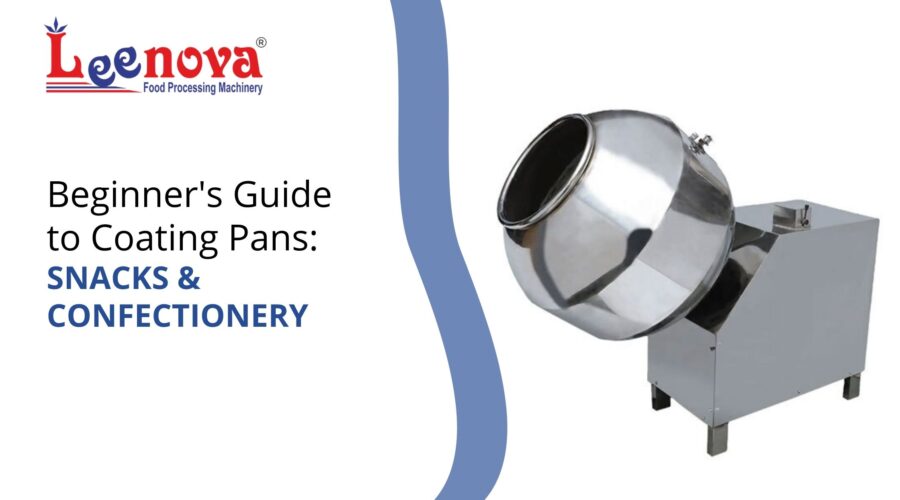
A coating pan is a rotating drum—open or enclosed—that tumbles snacks, nuts, or confectionery centers while you spray, drip, or pour a coating over them. The constant motion spreads the material evenly. Airflow or ambient cooling sets each layer before you add the next.
Panning is the term for this layered-coating process. Hard panning uses sugar syrups or chocolate to build thick shells around centers like almonds or dragée cores. Soft panning applies lighter coats—oil-based masala on namkeen, yogurt glaze on raisins, or butter seasoning on popcorn. Both rely on the same principle: gradual buildup in a tumbling environment prevents clumping and ensures every piece gets covered.
Typical products include coated peanuts, chocolate-covered nuts, sugar-panned candies, masala namkeen, flavored cashews, and glazed dry fruits.
Types of Coating Pans for Small Operations
Open Pans
The drum is exposed. You see the product tumbling and can pour or ladle coating directly in. Best for beginners and oil-based or thick coatings that don’t require precise temperature control.
Tilting Pans
The entire drum tilts forward for easy unloading. No need to scoop product out manually. Popular for namkeen coating, where batch sizes change frequently and cleaning between flavors matters.
Perforated and Enclosed Pans
Tiny holes in the drum let hot or cool air pass through, speeding drying and controlling temperature. Used for sugar work, chocolate panning, and high-output commercial lines.
Lab and Small-Batch Units
Compact pans that handle 1–5 kg per batch. Ideal for recipe testing, seasonal sweets, or cloud kitchens that produce limited SKUs.
How a Coating Pan Works
- Load the product into the drum—peanuts, namkeen, fried snacks, or confectionery centers.
- Start rotation at a slow to moderate speed so pieces tumble without breaking.
- Apply the coating in small amounts: drip syrup from a ladle, spray chocolate through a nozzle, or pour masala oil while the drum spins.
- Allow drying or cooling between passes. Airflow or ambient temperature sets each layer before you add the next.
- Repeat until you reach the desired thickness, gloss, or flavor intensity.
- Unload by tilting the drum or scooping out finished product.
Pan speed, airflow rate, and addition timing control whether coatings stick smoothly or form lumps. Beginners often add too much coating at once or skip the drying step, which causes clumping and uneven layers.
Choosing the Right Coating Pan
Capacity
Match drum size to your daily batch volume. A 10 kg pan suits a farsan shop making 20–30 kg of coated namkeen per day (two to three runs). Cloud kitchens and home-based sweet makers often start with 5 kg units.
Material
Stainless steel contact surfaces meet food-safety standards and resist acid from tamarind, tomato, or citric coatings. Powder-coated frames keep the structure rust-free in humid kitchens.
Speed Control
Variable-speed drives let you slow the drum for delicate puffed snacks and speed it up for dense nuts. Fixed-speed pans work fine for single-product operations.
Tilt Mechanism
Manual tilt or motorized tilt simplifies unloading and cleaning. If you switch between savory and sweet batches daily, tilt saves 15–20 minutes per changeover.
Space and Power
Tabletop pans fit counters in tight prep areas; floor models need dedicated floor space and often 1–2 HP motors. Check your electrical supply before ordering.
Operating Best Practices
- Pre-heat or cool the drum if your recipe demands it, then load product when temperature stabilizes.
- Add coating in thin passes—never flood the pan. Multiple light layers beat one heavy pour.
- Monitor tumbling action. If pieces slide instead of cascade, increase speed slightly; if they fly or break, slow down.
- Pause between additions to let each coat set. Impatience causes sticky masses that need rework.
- Clean immediately after each batch. Dried chocolate or caramelized sugar hardens and damages the drum surface.
Most beginner mistakes—bald spots, thick edges, broken pieces—trace back to overfilling the pan or skipping the drying interval.
Maintenance and Troubleshooting
Wipe the drum with a damp cloth after every use. Inspect spray nozzles weekly for clogs; soak them in warm water if coating has dried inside. Lubricate the motor mount and bearings monthly to prevent squeaks and wobbles.
Common problems:
- Bumpy surface: coating applied too fast or drum speed too slow.
- Incomplete coverage: batch size too large or rotation too fast.
- Peeling: insufficient drying between layers or incompatible coating formula.
Most issues resolve with small adjustments to speed, batch size, or addition rate.
FAQs
Q: Can I use the same pan for savory and sweet products?
A: Yes, as long as you clean thoroughly between batches. Residual oil or spice can flavor the next run. Tilting pans make cross-category use easier because unloading and rinsing take less time.
Q: How much coating material do I need per kilogram of product?
A: For light seasoning, 5–8% by weight; for sugar shells or chocolate, 20–40% depending on thickness. Start at the lower end and build layers until you reach the desired result.
Q: What’s the difference between a coating pan and a seasoning drum?
A: Coating pans rotate slowly and allow controlled drying between passes. Seasoning drums tumble faster and mix dry powders or sprays without layering. Some tilting pans handle both jobs.
Q: Do I need compressed air or external heating?
A: Not for basic oil-and-spice coating or room-temperature chocolate work. Sugar panning and precise chocolate tempering benefit from blowers and heaters, but beginners can start with open pans and ambient conditions.
Q: How long does one batch take?
A: Dry-spice coating on namkeen: 10–15 minutes. Sugar-panned peanuts: 60–90 minutes across multiple syrup layers. Chocolate coating: 20–30 minutes including setting time.
Next Steps
If uneven coatings, wasted material, or batch-to-batch variation are slowing your snack or sweet production, a coating pan removes those bottlenecks. Start by defining your product mix, estimating daily volume, and measuring available floor space. Then compare drum capacity, tilt features, and speed control across models that fit your budget.
Leenova Kitchen Equipments builds coating pans designed for Indian snack and mithai makers—namkeen, coated peanuts, dry-fruit mixes, and traditional sweets. Stainless-steel drums, easy-tilt unloading, and simple controls let beginners get consistent results from day one. Our pans integrate with roasters, mixers, and grinders so you can build a complete prep line as your business grows.
Visit leenovakitchenequipments.com to explore coating pan models, compare specifications, and request a quote tailored to your production needs.