

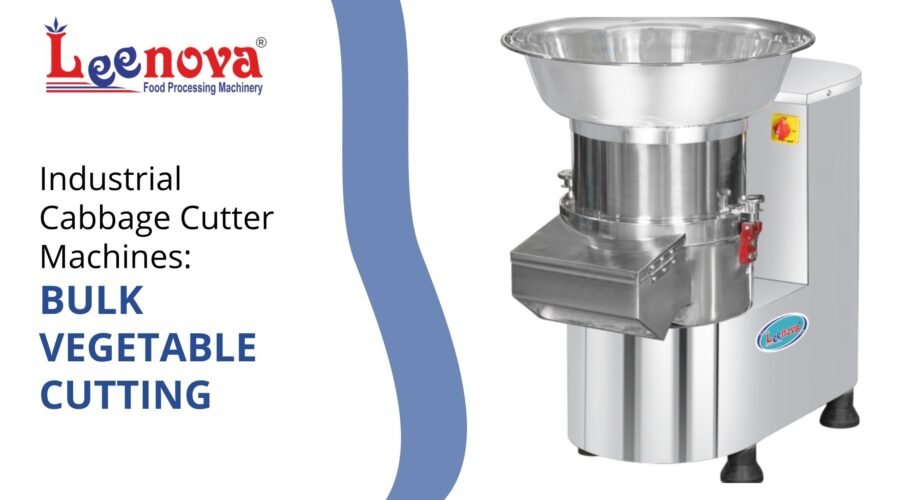
Cabbage is one of the most labour-intensive vegetables in commercial kitchen prep. A cook shredding cabbage by hand processes 8-12 kg per hour—barely enough for a mid-sized restaurant’s daily salad, coleslaw, and Manchurian requirements. When daily volume crosses 50-80 kg, hand-cutting ties up a full worker for 6-7 hours, creates uneven shreds that cook inconsistently, and exposes the kitchen to repeated knife-handling injuries. Industrial cabbage cutter machines resolve this by processing 100-2,000+ kg per hour with uniform cut sizes, minimal operator involvement, and food-grade stainless steel surfaces that clean in minutes. This guide covers machine types, capacity planning, cut styles, key features, and the buying criteria that determine whether a machine fits your daily prep cycle or creates a new maintenance headache.
Why cabbage cutting needs automation
Manual cabbage prep slows down at exactly the wrong moment—peak service hours. A 5 kg cabbage head takes 8-12 minutes to shred by hand to consistent thickness. A commercial machine handles the same head in 45-60 seconds. The quality gap compounds: hand-cut shreds vary 3-8 mm in width, creating uneven cooking in stir-fries and Manchurian preparations where texture consistency determines dish quality. Operations serving 150+ covers daily almost universally report that cabbage prep is their single largest hand-cutting time sink.
Types of cabbage cutter machines
Compact semi-automatic models
Semi-automatic cutters suit restaurants, canteens, hotel kitchens, and startup food operations:
- 1-1.5 HP motors handling 100-200 kg/hr
- Manual loading with automatic cutting and discharge
- Compact footprints fitting under standard counter heights
- Single-phase 220V operation, no special wiring needed
These machines replace 2-3 hours of daily hand-cutting for kitchens processing 50-150 kg of cabbage, freeing prep staff for plating, marinating, and cooking tasks that build actual service quality.
High-capacity industrial systems
Belt-fed continuous cutters and dual-head processing machines handle 400-3,500 kg/hr for vegetable processing plants and central kitchens:
- Conveyor belt feed for hands-free loading
- Adjustable cut thickness from 1-55 mm via mechanical or digital controls
- Multi-motor setups for sustained 8-10 hour production runs
- Three-phase 415V power, requiring dedicated circuit installation
Multi-function vegetable cutters
Several commercial models handle cabbage alongside potatoes, carrots, onions, and leafy greens using interchangeable blade cassettes. These suit kitchens where cabbage isn’t the only high-volume item but where buying separate machines per vegetable isn’t practical.
Capacity and output planning
Match machine capacity to your peak-day volume, not daily averages:
- 100-200 kg/hr: Restaurants, hotels, fast-food outlets, catering units
- 400-800 kg/hr: Central kitchens, large canteens, vegetable cutting contractors
- 2,000+ kg/hr: Industrial food processors, pickle manufacturers, packaged food plants
The overlooked calculation: effective daily capacity drops 20-25% below rated output when you account for loading time, cleaning between batches, and blade-change intervals. A kitchen planning for 150 kg daily should size at 100-120 kg/hr minimum, not 60-70 kg/hr.
Cutting styles and applications
Different cabbage preparations need specific cut geometries:
- Fine shred (1-3 mm): Coleslaw, salads, spring roll stuffing, Korean-style preparations
- Medium shred (4-8 mm): Stir-fry, noodle dishes, mixed vegetables
- Chop/rough cut (10-20 mm): Gobi Manchurian, bhaji, stuffed preparations
- Thick slice (20-55 mm): Grilled cabbage, braised preparations, buffet display
Machines with tool-free blade swaps change cut styles in 3-5 minutes. Fixed-blade models save cost upfront but limit menu flexibility—a relevant trade-off for kitchens running 4-5 cabbage-based dishes.
Key features to compare
Motor power and build quality
Food-contact surfaces must use SS304 minimum:
- Stainless steel blades resist corrosion from cabbage’s natural moisture and mild acids
- Welded frames outlast bolt-together designs in daily commercial use
- Enclosed motor housings prevent water ingress during cleaning
Discharge and cleaning design
Post-shift cleaning determines whether a machine gets used daily or avoided:
- Gravity-discharge chutes empty cut cabbage without manual scooping
- Smooth internal surfaces without sharp corners clean in 5-8 minutes
- Removable blade assemblies allow thorough sanitisation between varieties
Machines with textured interiors or complex blade mounts add 15-20 minutes of cleaning time per shift—directly affecting whether prep staff actually clean them properly.
Hygiene and food safety
Industrial cabbage cutters in food-service and processing contexts need to meet basic hygiene standards regardless of price point:
- SS304 or SS316 food-contact surfaces for all cutting chambers
- Sealed bearings and enclosed drives that don’t contact product
- Discharge designs that prevent cut cabbage from re-contacting uncut heads
Reduced manual handling isn’t just a time benefit—it cuts cross-contamination risk across multiple dishes prepared in the same session.
Use cases by business type
Fast-food outlets and Manchurian kitchens
Gobi Manchurian and veg Manchurian both require 8-12 mm rough-chopped cabbage in high volumes. A single 1 HP machine at 150 kg/hr prepares enough cabbage for 500-600 Manchurian portions in under 2 hours—before lunch service even begins.
Hotels and catering operations
Multi-cuisine menus need multiple cut styles from the same vegetable daily. Machines with interchangeable blades run fine shred for salad station, medium shred for stir-fry prep, and rough chop for stuffed preparations—all from one machine, all before peak service.
Food processing and vegetable supply units
Bulk pickle manufacturers, salad pre-pack units, and vegetable cutting contractors need industrial-grade continuous output. Belt-fed systems with automated discharge eliminate manual handling entirely, enabling one operator to supervise 1,000+ kg processing runs.
Buying criteria
Before purchasing, confirm these parameters in sequence:
- Daily kg requirement: Peak day cabbage volume ÷ available prep hours = minimum kg/hr needed
- Cut style requirements: List your top 3 cabbage preparations and required cut dimensions
- Automation level: Semi-automatic for varied daily prep; continuous belt systems for single-variety high-volume runs
- Power supply: Single-phase available for 1-1.5 HP machines; three-phase needed for 3+ HP industrial units
- Floor space and drainage: Measure available prep area and confirm drain position for daily cleaning
Frequently Asked Questions
Can a cabbage cutter handle other leafy vegetables?
Most models cut lettuce, spinach bunches, spring onions, and leafy herbs using the same blade setup as cabbage. Dense root vegetables like carrots or beetroot need harder blade geometry—check compatibility before assuming a cabbage cutter handles your full prep list.
How long do blades last under commercial use?
Stainless steel blades in daily commercial service last 12-18 months before dulling noticeably. Signs of wear include frayed shred edges, increased motor noise during cutting, and uneven cut widths. Replacement blade sets cost ₹2,000-₹6,000 depending on model.
Does cut quality differ between machine types?
Yes. Belt-fed continuous cutters maintain more consistent cut width because feed speed is controlled. Manual-feed semi-automatic models produce slightly more variance because operator push speed affects slice thickness. For salads and presentations where appearance matters, belt-fed models produce cleaner cuts.
What’s the cleaning time difference between models?
Compact semi-automatic machines with removable blade assemblies clean in 8-12 minutes. Industrial belt-fed systems take 25-35 minutes including conveyor cleaning. Factor cleaning frequency into your daily schedule—machines used 3 times daily need cleaning after each run, not just end-of-shift.
Conclusion
Industrial cabbage cutter machines eliminate the single biggest hand-cutting bottleneck in commercial kitchens. Calculate your peak-day cabbage volume, identify your primary cut styles, and match those to a machine capacity that gives you 20-25% headroom above daily requirements. Contact Leenova today with your daily kg requirement and prep schedule for a direct machine recommendation.
Leenova Kitchen Equipments manufactures commercial and industrial cabbage cutter machines sized for restaurants, hotels, catering units, and bulk vegetable processing operations. Built with food-grade stainless steel, adjustable blade options, and easy-clean discharge designs, Leenova machines deliver consistent shred, slice, and chop output at capacities from 100 kg/hr to 500+ kg/hr. With practical controls, reliable motors suited to continuous commercial use, and nationwide service support, Leenova helps kitchens cut daily prep time without adding staff or compromising cut quality. Share your daily cabbage volume, required cut styles, and kitchen constraints—the Leenova team will recommend the right model, confirm power and space requirements, and ensure the machine fits your prep workflow from day one.