
Day: March 19, 2026

Juice and Dough Processing Equipment for New Food Startups

Juice and Dough Processing Equipment

Most new food startups fail their first peak day—not because demand disappears, but because one underpowered juicer or a domestic dough mixer creates a 45-minute queue that kills repeat business. The uncomfortable pattern: founders spend heavily on branding and interiors, then run production on home-grade equipment that stalls when orders double. A single right-sized commercial juicer and one proper dough mixer eliminate this bottleneck before it forms. This guide covers the core juice and dough equipment categories every early-stage food startup needs, realistic capacity bands for your first 6-12 months, and the selection mistakes that force costly upgrades within a

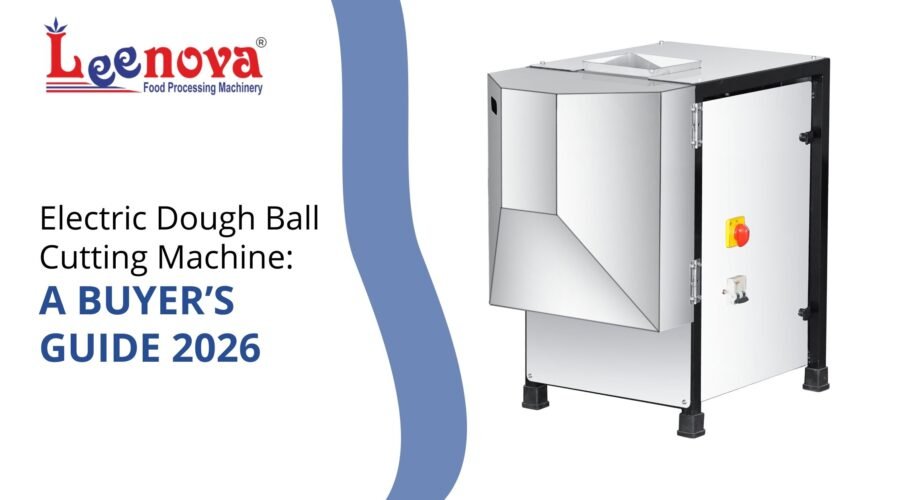
Electric Dough Ball Cutting Machine: A Buyer’s Guide 2026

SEO title preview: Electric Dough Ball Cutting Machine: A Buyer’s Guide 2026

Manual dough cutting in commercial kitchens produces weight variations of 15-25% per ball, meaning one roti puffs perfectly while the next stays flat and chewy. For a tiffin unit preparing 2,000 rotis daily, that inconsistency wastes 8-12% of dough through over-portioning and rejects, while tying up two staff members for 3-4 hours in repetitive cutting and rolling. A well-matched electric dough ball cutting machine eliminates both problems. Compact tabletop units produce 1,000-2,500 uniform balls per hour with one operator; larger automatic machines reach 3,000-4,000 pieces per hour with ±0.1g weight deviation on industrial models. As Gujarat-based food equipment manufacturers since